









OUR BLOG
Reduce cost of Rack audits by Documenting using Photos

How Photo Documentation Reduces Rack Audit Costs in Warehouses

Are your rack audits costing more than they should? For many warehouses, rack inspections are a required part of warehouse compliance. Over time, however, these audits can become expensive and disruptive. Inspectors spend hours onsite, operations slow down, and follow-up audits are often scheduled because documentation is incomplete or unclear.
In most cases, rising rack audit costs are not caused by unsafe racking. They are caused by poor safety documentation.

The hidden cost of traditional rack inspections

In busy warehouse environments, rack damage is almost unavoidable. Forklift contact, bent uprights, shifted beams, and missing anchors occur gradually during daily operations. When pallet rack inspections rely mainly on written notes or verbal explanations, inspectors must spend additional time verifying conditions in person.
Descriptions such as “minor bend” or “possible impact damage” leave too much room for interpretation. This uncertainty often leads to longer inspections, overly cautious recommendations, and sometimes unnecessary repairs or repeat visits, all of which increase total rack audit costs.

Why photo documentation simplifies rack audits

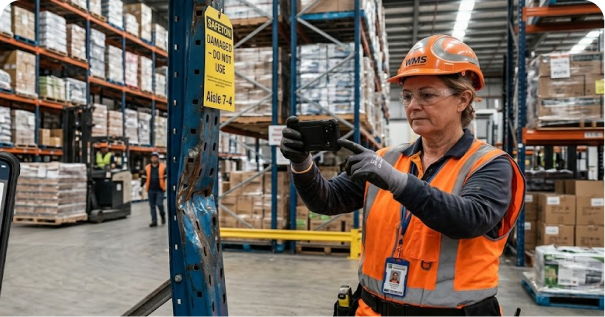
A clear image of a bent upright or missing anchor communicates the condition instantly, without lengthy explanations. This allows inspectors to assess severity quickly and focus only on genuine safety risks.
Photo documentation also provides context. Images show surrounding rack structures, load conditions, and floor connections, enabling faster and more accurate decisions. When inspectors can review this information in advance, onsite audit time is reduced, and follow-up inspections are often avoided altogether.
Consistent photo-based warehouse safety documentation creates a visual record that supports safer decisions while lowering the overall cost of rack audits.

Best practices for documenting rack conditions with photos

To reduce rack audit costs effectively, photo documentation must follow a structured and repeatable process. 
1. Use a standardized documentation process
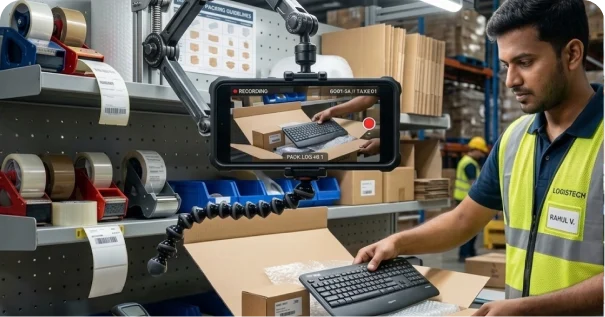
Photos should be captured consistently across all inspections. Standardized workflows ensure every inspection records the same level of detail, making documentation easier for inspectors to review remotely.
2. Capture photos during routine safety inspections
Photos should be taken during regular walk-throughs, not only during annual audits. Time-stamped images from daily or weekly inspections create a clear timeline of rack conditions and demonstrate ongoing warehouse compliance.
3. Document both context and damage clearly
Each issue should include a wide-angle photo showing the full rack section, followed by a close-up of the specific damage. This combination helps inspectors understand severity without needing additional clarification.
4. Maintain consistency in photo capture
Photos should be taken from similar angles and heights, especially in high-risk areas such as aisle ends and floor-level uprights. Consistency makes it easier to compare conditions over time and across locations.
5. Organize evidence and close the loop with proof of repair
All inspection photos should be stored in a central, searchable system. After repairs are completed, follow-up photos should be added to confirm resolution. This organized evidence often eliminates the need for repeat pallet rack inspections.

Prepare better and make the audit faster

Warehouses that consistently document rack conditions build a valuable visual history. This approach shows active warehouse safety documentation rather than one-time compliance efforts.
When auditors can review photo evidence in advance, onsite inspections become more efficient. Inspectors spend less time verifying basic conditions and more time confirming compliance. The result is shorter audits, fewer follow-ups, and lower audit costs overall.

Conclusion

Rack audits do not have to be a costly burden. By implementing photo-based warehouse safety documentation, inspections become faster, clearer, and more predictable.
Over time, consistent photo documentation reduces unnecessary repairs, avoids repeat audits, and supports ongoing warehouse compliance. Start building your visual inspection history today, and your next rack audit will cost less than the last.
Share this Article
Dive Deeper