








OUR BLOG
Rack Repairs Alerts

Warehouse Safety Audits: Pallet Rack Inspection & Repair Automation

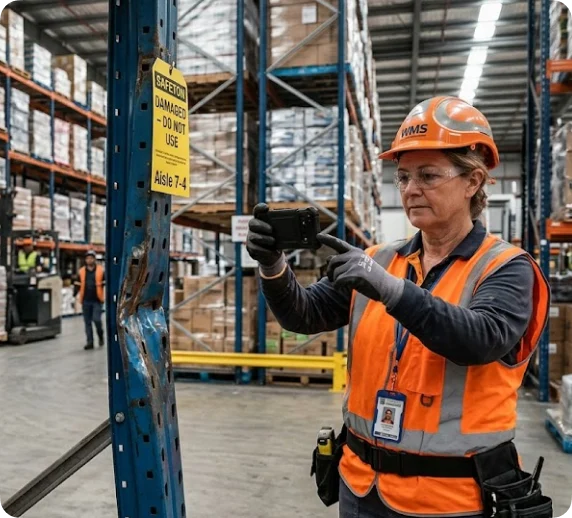
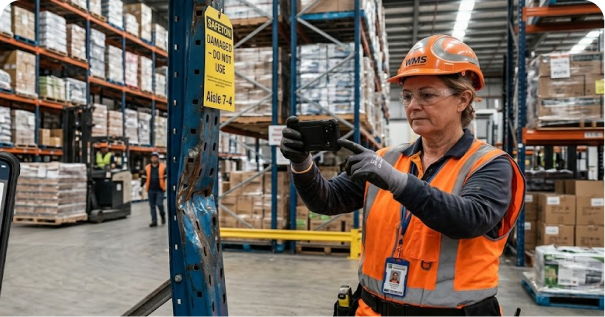
During a routine warehouse safety audit, damage to a rack upright is identified, documented, and photographed before the inspection continues. Ideally, that issue would be repaired quickly. In reality, even well-managed operations can experience delays. Reports may wait for review, vendor notifications can be postponed as priorities shift, and site visits are sometimes required before a quote is issued. What begins as a straightforward repair can take weeks to resolve, leaving damaged racking in service longer than intended.
For operations teams focused on safety, warehouse compliance, and uptime, the challenge is not just identifying damage—it is ensuring a clear and timely path from detection to repair. Closing this gap is what turns a standard safety program into a truly proactive one.

Where Traditional Pallet Rack Inspections Lose Momentum

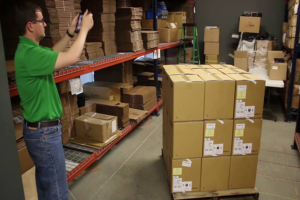
In many facilities, a pallet rack inspection is performed thoroughly. Supervisors or safety leads walk the floor, document issues, and log findings into a report. From a documentation standpoint, this reflects a strong commitment to warehouse safety.
The breakdown often happens after the inspection.
The breakdown, however, often happens after the inspection. Reports may be shared through email, maintenance teams are balancing multiple priorities, and repair vendors are not always contacted immediately. As a result, damaged racking can remain in use longer than planned.
From an operational perspective, this delay leads to three key challenges:
  • Increased safety exposure while compromised racks remain loaded.
  • Compliance gaps if repairs are not clearly linked to documented inspection findings.
  • Higher long-term costs when minor damage progresses into more serious structural issues.
The inspection process works; the follow-through process is where the opportunity for rack repair automation exists.

Best Practice: The "Find-to-Fix" Workflow

High-performing operations are moving toward a more connected “find-to-fix” workflow. The principle is simple: once a defect is documented during a warehouse safety audit, the repair process should begin without manual intervention.
Here is how this approach can be structured within a facility:
1. Standardize Visual Documentation
When a pallet rack inspection is conducted—whether monthly, quarterly, or as needed—documentation should go beyond noting “damage.” A consistent set of photos makes a significant difference:
  • Wide-Angle Image: Shows the rack location and surrounding context.
  • Close-Up Image: Clearly shows the point of impact or structural failure.
Clear visuals often allow repair partners to assess the issue and prepare quotes remotely, reducing the need for a separate pre-inspection visit.
2. Trigger Immediate Vendor Notification
Instead of relying on follow-up emails, leading operations implement rack repair automation. In this model, documented rack damage automatically generates a notification to the designated repair partner. When location details, photos, and priority levels are included from the start, vendors can respond more accurately.
3. Shorten the Quote-to-Approval Timeline
With the necessary information available upfront, repair partners can return quotes sooner. This shortens the time between issue identification and repair approval, helping facilities maintain warehouse compliance before risks escalate.

Strategic Insights from the Warehouse Floor

Warehouse safety processes are most effective when information flows smoothly from the floor to the office and onward to service partners. When repair communication is streamlined, the result is not only faster fixes but also stronger protection for employees, inventory, and daily throughput.

Actionable Step

Review current rack audit procedures and confirm what information repair partners need to provide a quote without a site visit. Incorporating those requirements into standard inspection documentation can significantly reduce repair cycle times. Consistency strengthens safety. Efficient communication strengthens response time. Together, they help operations stay ahead of risk while maintaining performance.
Share this Article
Dive Deeper