















OUR BLOG
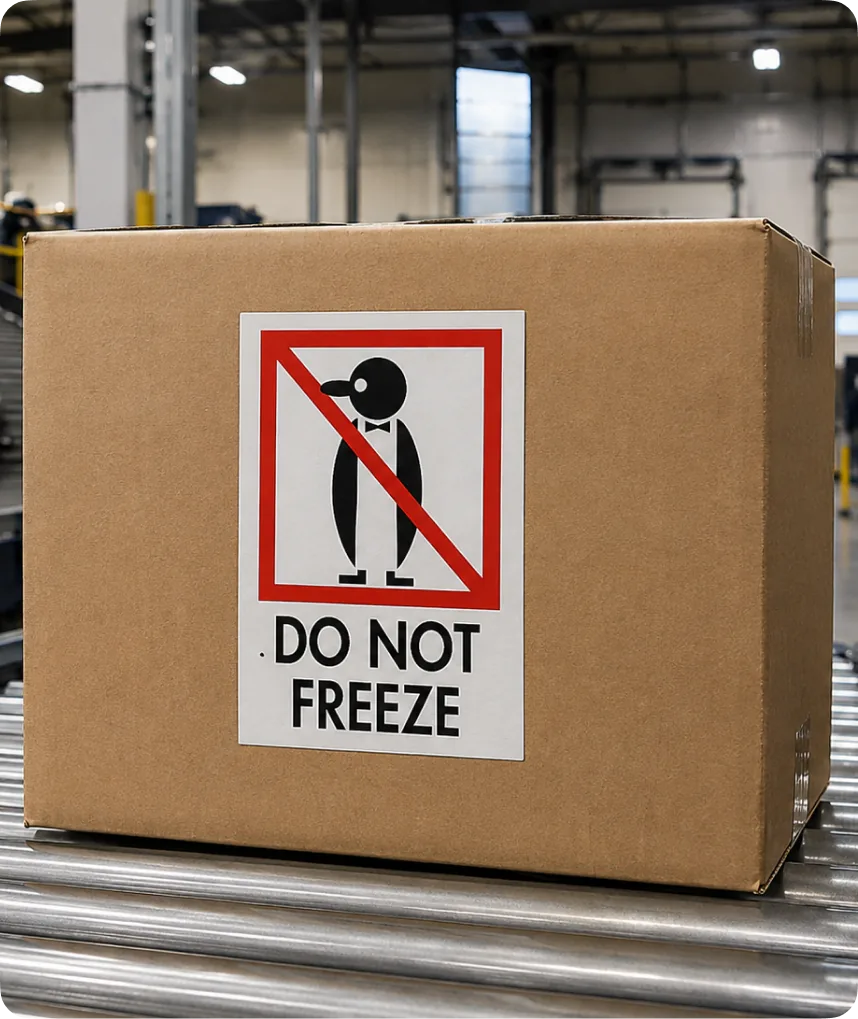
Do not Freeze label

Shipping Warning Labels for Cold-Sensitive Goods: What to Know

Moving a package from origin to destination quickly is a baseline requirement, but maintaining product integrity throughout the journey is the real challenge. Speed becomes irrelevant if the shipment arrives ruined by the cold. While ‘cold chain’ logistics is often associated with keeping items frozen, the reverse is frequently the priority: keeping temperature-sensitive cargo from freezing is a critical operational challenge.

This high-contrast “Do Not Freeze” label, featuring a black penguin inside a red strike-through box, is a professional control signal. It is not just a polite request; it is a mandatory handling instruction. In a dim warehouse or a crowded delivery truck, this unique visual cue stops handlers from making assumptions that could lead to product failure.

Visual Controls and the Risk of Thermal Shock

Many shipping boxes look identical, especially when the warehouse is moving at high speed. Without a clear signal, temperature-sensitive cargo is often treated like standard freight. When temperatures drop below freezing, the internal chemistry of many products is permanently changed.

It is important to remember that freezing damage is almost always irreversible. The visual warning helps prevent freezing damage by telling handlers that this product cannot stay in a cold trailer or on an outdoor loading dock during winter.

Many different products need this protection:

  • Medical Supplies: Vaccines and liquid medicines can lose their strength.
  • Industrial Liquids: Paints and glues can separate and become unusable.
  • Sensitive Electronics: Cold air can cause moisture to build up inside devices, leading to shorts.
Carton with a red and white DO NOT FREEZE label showing a crossed-out penguin symbol

Best Practices for Shipping Cold-Sensitive Goods

The success of your logistics cold chain depends heavily on how you manage both physical protection and data visibility. Here are the best practices for handling a “Do Not Freeze” shipment.

1. High-Visibility Placement and Redundancy

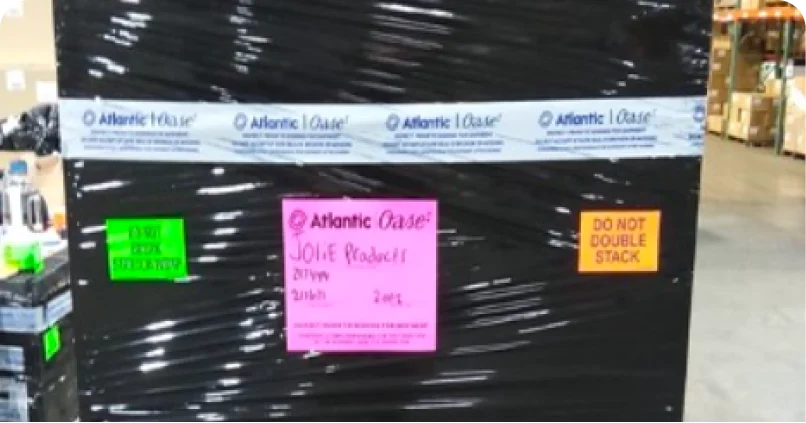
A label can only do its job if it is seen. The provided “penguin” label is designed to be loud and clear, but one sticker is not enough for a bulk shipment. These labels must be applied to at least two opposing sides of a carton or pallet. For large, temperature-sensitive cargo, visibility must be maintained from 360 degrees. Handlers scanning from any angle must immediately recognize the handling constraint.

2. Physical Protection: The "Buffer" Zone

A label is not insulation. When shipping during the winter, you must use proper packaging, such as insulated container liners, polystyrene foam, or active heat packs. However, a crucial warehouse practice is warehouse climate control. Staging pallets of “Do Not Freeze” cargo directly against a thin, uninsulated bay door during a cold night is an invitation for disaster. These shipments must be staged in the center of the warehouse where temperatures are stable.

3. Active Monitoring for Contractual Proof

In professional logistics cold chain management, you cannot manage what you do not measure. A best practice is to include an “active indicator” or a “freeze-event recorder” inside the box. While the physical label is the first defense, these recorders provide data. In the event of an insurance claim or customer dispute, having a time-stamped record of the internal temperature proves exactly where the “freeze-event” occurred.

4. Clear Communication and The "Receiving Handshake"

When handling a “Do Not Freeze” shipment, your responsibility doesn’t end when the box leaves your loading dock. You must utilize digital Advanced Shipping Notices (ASNs) to notify the receiver. When they get the digital note that the incoming pallet has strict warehouse climate control needs, their team will be ready to immediately move it from the dock to a secure, warm environment, rather than letting it sit on the receiving floor for hours.

Conclusion: A Simple Label for Complex Cargo

Temperature-sensitive cargo represents a significant financial investment. A small frozen vial can represent the failure of an entire batch of medical supplies or the shutdown of a factory line. This simple “Do Not Freeze” label with the penguin is the single most effective, low-cost tool to protect that investment.

The goal is absolute visibility throughout the entire journey. When your logistics team prioritizes proper labeling and enforces structured climate control protocols, you remove the risk of the unknown. Protecting your cold-sensitive goods isn’t just good business; it’s about ensuring compliance and reliability for every customer.

Share this Article
Dive Deeper