









OUR BLOG
HAZARDOUS WASTE

Why Hazardous Waste Labeling Fails and How to Fix It Before an EPA Audit

Treating hazardous waste as just another operational byproduct is a major mistake that usually ends in a massive EPA fine. In a high-velocity industrial environment, clarity is a form of control. Hazardous waste is a regulated, time-sensitive risk that demands immediate recognition. Maintaining waste labeling compliance isn’t just a procedural hurdle; it is a critical safety mechanism that ensures every container communicates its risk without the need for interpretation.

Improper labeling remains one of the most frequent citations during EPA and OSHA inspections. Fast-paced warehouses rely on the red-bordered “Hazardous Waste” label as a control point, ensuring that chemicals never become an untracked risk. To maintain chemical handling safety and stay under the radar of regulators, your labeling process must be as disciplined as your outbound shipping.

Why the Label Matters

A hazardous waste label serves as the foundation for industrial hazard control. It isn’t just a sticker; it is a live tracking document that dictates how every person in the facility interacts with that container.

  • Immediate Hazard Communication – It allows any employee, from a janitor to a forklift driver, to instantly recognize the risk level and the required precautions.
  • Regulatory Control Point – It triggers compliance timelines, storage limits, and mandatory inspection criteria.
  • Emergency Response Guide – In the event of a spill, leak, or fire, first responders rely on the label to determine the correct neutralizing agents. .

Without accurate waste labeling compliance, your waste stream becomes a black box that threatens your safety standards and exposes your business to “cradle-to-grave” liability.

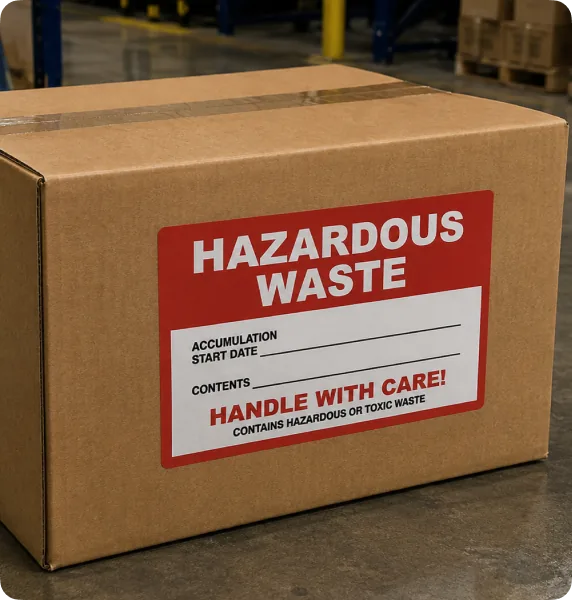
Carton with a red and white HAZARDOUS WASTE label showing accumulation start date and contents fields

1. The Strategic Placement Protocol

Visibility is your greatest asset in chemical handling safety. If a label is hidden against a wall or obscured by shrink wrap, it might as well not exist.

  • The 180° Rule: On 55-gallon drums, apply two labels on opposite sides. This ensures that no matter how a forklift operator drops the container, the warning is visible from the aisle.
  • Avoid the “Curb”: Never place labels on the curved shoulders or over the seams of a drum where they are prone to peeling.
  • Clean Surface Prep: Always wipe the drum surface before applying the label. Dust and oil films are the primary reasons labels fail to bond, leading to non-compliance when they eventually fall off in transit.

2. Accuracy is a Legal Shield

The fields on this label are legal data points. Precision here is the backbone of industrial hazard control.

The Accumulation Start Date: This is the most scrutinized field on the label. The moment the first drop of waste enters the container, the date must be logged. Missing this date is an automatic fail in a waste labeling compliance audit because it suggests the facility has no control over its storage timelines.

Specificity in “Contents”: Never use vague terms like “Waste Chemicals.”

  • Bad: “Dirty Solvent”
  • Best: “Used Acetone / Isopropyl Alcohol Mix”
  • The Test: If a first responder saw this leaking, would they know exactly what PPE to wear? If the answer is “maybe,” the label is a failure. Consistency with your Safety Data Sheets (SDS) is mandatory to meet modern supply chain safety standards.

3. Use Industrial-Grade Verification

Warehouse environments are brutal on paper and ink. Moisture, heat, and chemical vapors will destroy standard office supplies, undermining your safety protocols.

  • Ink Integrity: Use industrial-grade permanent markers. Standard pens fade, and cheap markers bleed when exposed to solvent vapors. If the text isn’t legible from six feet away, it doesn’t meet labeling compliance.
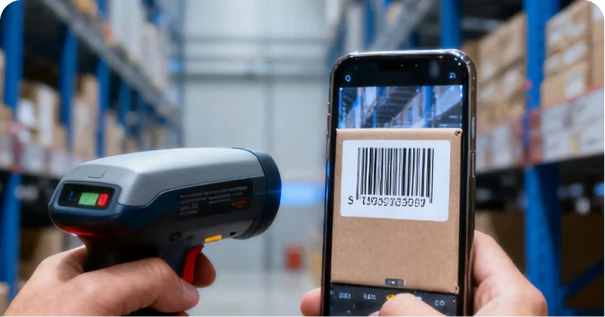
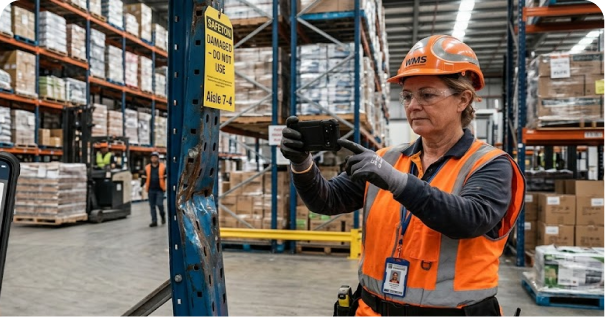
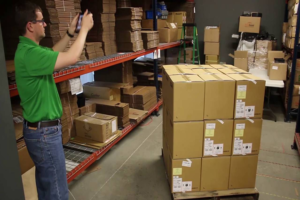
  • Photo Documentation: Use your mobile device to take a high-resolution photo of every drum once the label is applied. Capturing the “Start Date” and the “Contents” in a timestamped image provides an ironclad digital audit trail. This proves to inspectors that the drum was labeled correctly from day one.

4. Standardizing the Workflow

Consistency dies when employees have to hunt for supplies. To strengthen your industrial hazard control, create a dedicated labeling station at the point of waste generation.

  • Label Kits: Keep a weatherproof bin with labels, markers, and a “Common Contents” cheat sheet in one spot.
  • Weekly Audits: Incorporate a “Label Check” into your weekly safety walk. Look for peeling corners or fading ink. Catching a mistake on a Tuesday is significantly cheaper than having an EPA inspector find it on a Wednesday.

Conclusion: Precision as a Habit

Logistics operations depend on the intersection of clarity, speed, and control. The hazardous waste label supports all three by ensuring that every container is properly identified and time-bound. When chemical handling safety is treated with the same precision as your inventory, waste remains visible and compliance is maintained.

When a team treats these labels with professional discipline, they aren’t just filling out a form, they are protecting their colleagues, their facility, and the environment.

Share this Article
Dive Deeper