






Proudly Located at the Advanced Tech Dev Center at Georgia Tech
OUR BLOG
Create flexible forms using LoadProof

Why Paperless Warehouse Operations Depend on Smarter Digital Forms in Logistics

We talk about digital transformation in logistics, but step onto many dock floors and the reality still appears: a clipboard. It’s not just an outdated tool — it’s a bottleneck that slows operations and weakens data integrity.
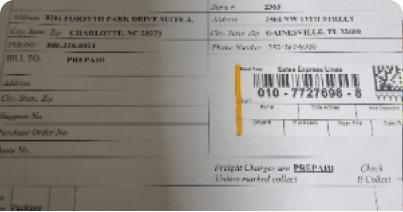
Paper wasn’t designed for the pace of modern supply chain visibility. Every handwritten note, every manually keyed-in container number, and every stack of binders creates friction that costs your business time and money. If you’re an operations professional, you know the pain: watching an associate juggle equipment and paper, or frantically digging for last month’s inspection report during an audit.
The solution is simple, yet powerful: achieving true paperless warehouse operations by implementing flexible digital forms.

The Real Cost of Paper-Based Logistics

For the modern supply chain, paper creates three unacceptable liabilities that impede warehouse workflow automation:
1. The Data Accuracy Trap
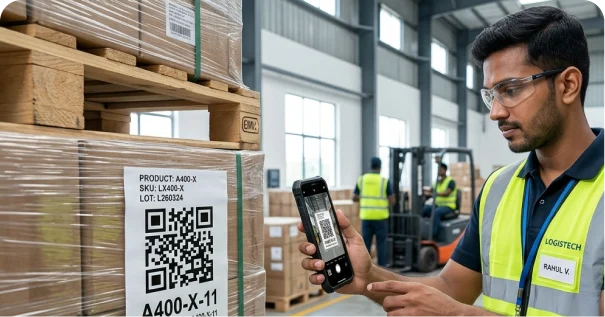
The journey of a piece of information from the dock door to the back-office system is a gauntlet of manual transcription. Someone writes down a container number, someone else reads it back, and a third person keys it into a spreadsheet.
Every step is an opportunity for “fat-finger” errors. In the world of supply chain visibility, inaccurate data is the same as invisible inventory. This leads to shipment delays and painful reconciliation during audits.
2. The Velocity Killer
Paper documentation inherently creates lag. Critical data only begins its journey after a physical receipt is signed, collected, and manually scanned. This friction kills velocity, slowing down decision-making across your network and extending cycle times.
3. The Compliance Burden
When an audit hits, time is money. Sifting through bankers’ boxes for a six-month-old delivery receipt is stressful and inefficient. Digital logistics forms solve this by building a definitive, searchable audit trail the moment the data is captured, making compliance instant and effortless.

Best Practice: Embrace Flexibility, Not Just Digitization

Simply taking a photo of a paper form isn’t true digital transformation. The core principle of warehouse workflow automation is designing a tool that adapts to the process, not the other way around. A flexible digital form is smart and is central to a paperless warehouse operations strategy:
1. It knows Who is filling it out (via user credentials).
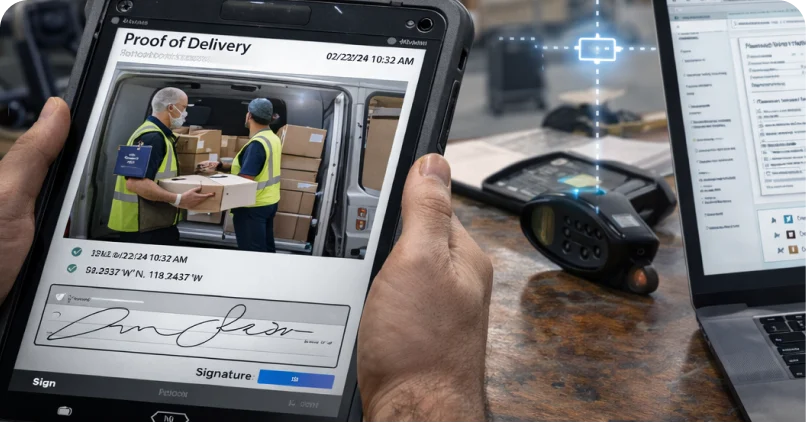
2. It knows Where they are (via GPS capture).
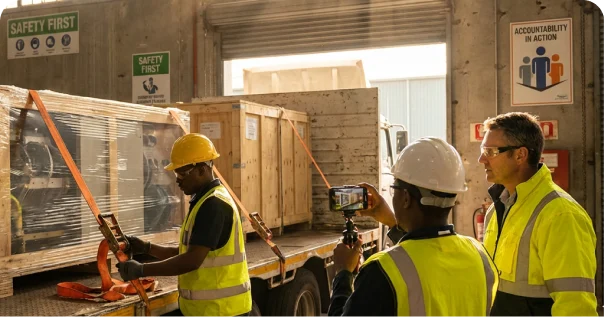
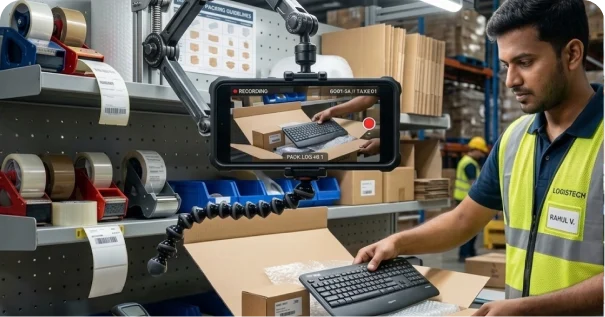
3. It captures Evidence (photos/video) instead of just text, providing irrefutable proof for claims and condition reports.
It works in Dead Zones, offering offline functionality that syncs automatically when reconnected, ensuring compliance everywhere.

Three Actionable Steps You Can Implement Today

1. Deconstruct and Simplify Your Paper
Before you digitise, audit every paper form. Ask your frontline team: What fields are constantly skipped? What information is duplicated across multiple documents? Your goal is ruthless simplification. You will often find that three different paper sheets can consolidate into one smart, efficient digital logistics form.
2. Design for the Hand, Not the Desk
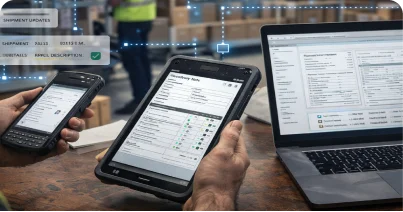
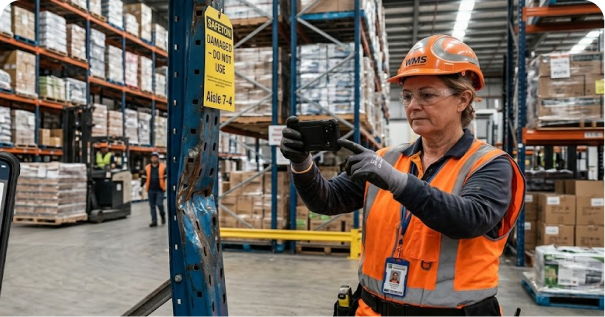
Your team is operating on mobile devices, often while wearing gloves. Forget fields designed for typing. When designing digital logistics forms, focus on large tap-targets, drop-down menus, and toggle switches. Prioritise User Experience (UX). A good digital form should be faster to complete than the paper original.
Pro Tip: Use conditional logic. If an inspector checks “Damage Found,” the form should instantly pop up a required photo field. If they check “No Damage,” the field stays hidden. This keeps the interface clean and fast.
3. Set Up Simple Automation Triggers
A flexible form’s power is unlocked when it connects to the rest of your operation. Start with a basic rule: once a form is completed, automatically email a PDF copy to the customer or trigger a notification to accounting. By connecting the submission to the next step in your process, you achieve true efficiency and accelerate your cycle times.

Final Thoughts

The move to flexible digital forms in logistics is less about technology and more about respecting the time and effort of the people on the front lines. By implementing smart, flexible forms, you aren’t just saving paper; you are upgrading your entire supply chain, ensuring better compliance, and future-proofing your business against the complexities of global trade.
Transitioning to digital records does more than save time, it improves accountability and consistency across warehouse operations.
Share this Article
Dive Deeper