










Proudly Located at the Advanced Tech Dev Center at Georgia Tech
OUR BLOG
Perform Safety Inspections Using Photos

Why photo inspections are the key to real-time risk resolution for your warehouse safety?

Let’s be real for a second: most warehouse safety “programs” are just people checking boxes on a piece of paper so that the manager stays happy. But a checkmark doesn’t tell you how badly a rack is bent, and a scribbled note doesn’t show you exactly how much oil is leaking near the forklift charger.
By the time those paper reports make it to the right desk, the “minor” problem has usually turned into a major operational loss. If you want to protect your floor, you have to stop describing hazards and start showing them. Transitioning to photo-based inspections is the single fastest way to turn a slow, reactive safety culture into a high-speed risk resolution engine.

The Problem: You Can’t Fix What You Can’t See

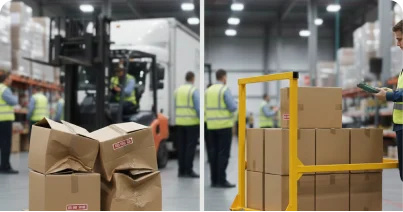
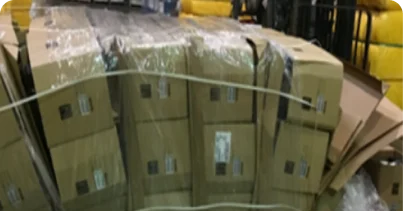
Traditional safety audits are vague. If a report says “debris in Aisle 7,” it might sit in an inbox for hours. But a photo of a tangled mess of shrink wrap caught in a forklift’s wheels? That gets attention immediately. Moving to visual evidence changes the game in three ways:
1. Total Clarity: A photo shows the severity. Is it a scratch or a structural failure? The camera doesn’t lie.
2. Precision Tracking: GPS and zone tags mean your maintenance crew doesn’t waste time “hunting” for the problem. They walk straight to the hazard.
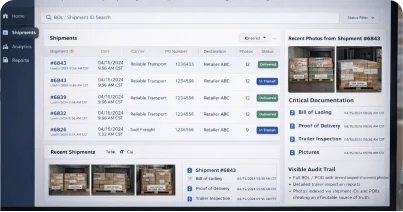
3. A “Digital Receipt”: Timestamped photos provide a bulletproof audit trail that protects your facility during insurance reviews or OSHA visits.

4 Danger Zones Where "Good Enough" Documentation Fails

To drive real warehouse safety, your team should be snapping photos of these four high-stakes areas every single day:
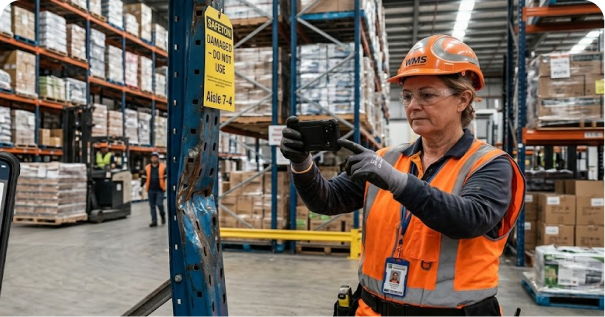
1. Rack Integrity: A dented upright is a ticking time bomb. A single collapse can easily wipe out $5,000 in inventory in five seconds. Photos ensure that structural risks are flagged and repaired before the steel gives way.
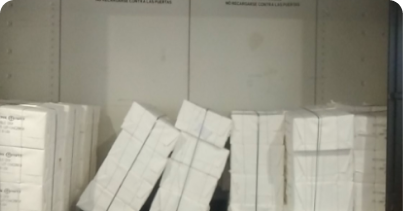
2. Pallet Stability: We’ve all seen the “Leaning Tower of Pallets.” Taking a quick photo before it tips allows you to correct the picker and document the risk before it becomes a cleanup job.
3. The “Trip Wire” Aisles: Shrink wrap and broken pallet slats are the #1 cause of warehouse injuries. Documenting these “zones of shame” digitally is far more effective than a 20-minute lecture in a breakroom.
4. Equipment Hotspots: Spills or clutter near charging stations are disaster magnets. Photo documentation ensures these hazards are cleared in minutes, preventing a slip-and-fall claim that could cost your company thousands.
From “Fixing” to “Preventing”
Taking the photo is just the start; the real win is being able to circle a hazard on your screen and assign it to a supervisor on the spot. It removes all the ‘what-ifs’ and ‘where-is-its,’ which is exactly why safety issues get resolved 40% faster.
Over time, these photos become your best training tool. If the same rack gets hit every week, the visual evidence might show you that the aisle is too narrow or the lighting is poor. You stop just fixing the dent and start fixing the reason the dent happened.

Final Thought

At the end of the day, warehouse safety shouldn’t be a bureaucratic headache that slows your team down. It should be the backbone of a high-performing facility. When you ditch the clipboard for the camera, you’re doing more than just ‘following the rules’; you’re building a culture of total transparency.
By turning every employee into a proactive safety inspector, you’re securing your three most important assets: your people, your product, and your profit. It’s time to stop letting operational loss hide in your blind spots. Start capturing the proof, speeding up your risk resolution, and turning your safety protocol into your facility’s greatest competitive advantage.
Share this Article
Dive Deeper