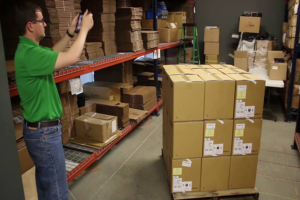
Mandatory photo proof secures parts shipping profit

OUR BLOG While Shipping Parts to show accuracy & No Shorts document part# using photos  Go to Blog list page Mandatory photo proof secures parts shipping profit Best PracticeTechnical Summary Automated Parts Verification To ensure 100% parts shipping accuracy, this standard mandates a digital proof of shipment for every outbound order. This proactive approach to preventing shipping errors improves parts inventory control by validating the pick-and-pack process in real-time. Critical Documentation: Every shipment must include…

Essential Flatbed Load Securement for High-Value Freight Shipping

OUR BLOG Flat Bed Truck Shipping Check List – Document this with photos Go to Blog list page Essential Flatbed Load Securement for High-Value Freight Shipping Best PracticeTechnical Summary High-Value Load Protection To ensure Shipper Liability Protection, this procedure mandates a dual-layer Freight Integrity Verification protocol. By replacing manual logs with a driver-signed checklist and time-stamped photos, facilities secure an irrefutable record of Flatbed Load Securement before departure. Critical Documentation: Detailed photos of tie-down points…

The Smart Way to Document Damaged Customer Returns in Reverse Logistics

OUR BLOG Document Condition of Return Go to Blog list page The Smart Way to Document Damaged Customer Returns in Reverse Logistics Best PracticeTechnical Summary To fortify Reverse Logistics and maximize recovery on Warranty Claims, this procedure replaces subjective reporting with a mandatory Returns Management Facility (RMF) visual audit. By documenting the precise condition of inbound packages before and after unboxing, facilities can substantiate Carrier Insurance Claims and eliminate “mystery damage” disputes. Critical Documentation: A…

Why Load Strapping is a Non-Negotiable Safety Standard

OUR BLOG Use Load Straps to secure Pallets Go to Blog list page Why Load Strapping is a Non-Negotiable Safety Standard Best PracticeTechnical Summary To achieve maximum Cargo Stability in Transit and succeed in Reducing Shipping Damage, LoadProof recommends a Strategic Load Strapping standard. This procedure requires the application of durable load straps over the highest, most unstable points of a wrapped pallet, anchoring the strap ends directly to the pallet stringers to provide downward…

Warehouse Claims Resolution Through Better Proof of Fulfilment

OUR BLOG Record video proof at the packing station to prevent shortages.Go to Blog list page Warehouse Claims Resolution Through Better Proof of Fulfilment Best PracticeTechnical Summary To accelerate warehouse claims resolution and eliminate inventory shrinkage, LoadProof recommends a Packing Station Video Verification standard. This procedure requires a top-down “Box View” that captures the scanning of the item, the visible placement of the correct unit count, the application of void fill, and the final sealing…

Improving Outbound Quality Control: How to Prevent Warehouse Shortage Claims

OUR BLOG Document Weight to show Zero Shorts using Photo Go to Blog list page Improving Outbound Quality Control: How to Prevent Warehouse Shortage Claims Best PracticeTechnical Summary To eliminate warehouse shortage claims and ensure retailer compliance, LoadProof recommends a “Scale and Snap” outbound quality control standard. This procedure requires verifying the actual pallet weight against the expected order weight followed by capturing a single high-resolution photo that includes the scale readout, the pallet condition,…

Cold Chain Management: Ship/Receive with Sensor Proof

OUR BLOG Document Temperature from Sensor Go to Blog list page Cold Chain Management: Ship/Receive with Sensor Proof Best PracticeTechnical Summary To optimize Cold Chain Management and prevent financial loss, LoadProof suggests that the integration of sensor scans is imperative with every transportation cycle. By logging data at the start and end of the trip, a Temperature Data Logger provides the visibility needed for comprehensive Cold Chain Monitoring, instantly flagging any Temperature Excursion that occurred…

Pallet Securement Techniques to Reduce Freight Damage

OUR BLOG Best Practice –  Use Load Bars to avoid pallets tipping Go to Blog list page 5 Pallet Securement Techniques to Reduce Freight Damage Best PracticeTechnical Summary To eliminate lateral force and reduce freight damage, LoadProof recommends a unitized loading standard. This requires the use of Cargo Securement Bars (Load Bars) installed every 6–8 feet and behind the final row. This infrastructure creates a rigid framework that prevents “walking” and tipping. Critical Documentation: A final…

Dunnage Bags: Key to Load Securement Best Practices & Stability

OUR BLOG  Is your product tipping and falling over at the time of delivery? Use Airbags to avoid fall over Go to Blog list page Dunnage Bags: Key to Load Securement Best Practices & Stability Best PracticeTechnical Summary To uphold Load Securement Best Practices, this procedure addresses the “void space” within a trailer that leads to cargo shifting. By strategically deploying Air Bags between pallets and trailer walls, warehouses can effectively neutralize the forces of…

Pallet Double Stacking Prevention: 2 Steps to Guaranteed Freight Damage Reduction

OUR BLOG Best Practice –  Apply do not allow Double Stack Cones & Document using photos   Go to Blog list page Pallet Double Stacking Prevention: 2 Steps to Guaranteed Freight Damage Reduction Best PracticeTechnical Summary This best practice utilizes physical barriers and digital proof to mitigate the risk associated with damaged goods in the Supply Chain Risk aspect related to crushed freight. Specifically, facilities can use Specialty cones to combine Pallet Double Stacking Prevention and…