










Proudly Located at the Advanced Tech Dev Center at Georgia Tech
OUR BLOG
Document Weight to show Zero Shorts using Photo

Improving Outbound Quality Control: How to Prevent Warehouse Shortage Claims

A shortage claim rarely starts as a crisis.
More often, it begins with a quiet email, a line item on a report, or a frustrated call from a customer’s receiving team. They ordered 1,000 units of a high-value SKU, but now they’re claiming only 950 arrived.
In the warehouse world, we call these “shorts.” To the front office, they are a financial headache that directly impacts retailer compliance. To those of us on the floor, they can feel like a personal challenge to our process. You know your team picked the order correctly. You know the pallet was wrapped tightly and sent out clean. Yet, without clear proof, you’re often left absorbing a chargeback just to keep the peace.
To protect your margins, it is time to move beyond the “he-said, she-said” mentality and embrace a pragmatic, evidence-driven approach to outbound quality control.

The Shortcomings in Typical Verification

Traditionally, a manual double-check system is used in most centers, where one person picks up, and another checks. Paperwork-wise, it is perfect. Realistically, people can get tired, labeling can go amiss, and items can be left in a packing station.

No matter how accurate your team is, you lose control of the narrative the moment that pallet disappears into the carrier’s trailer. When a box gets lost en route or an incorrect count is made at the destination dock, the fault is almost always assumed to be with the shipping department. Unless you have a reliable “system of record,” you have no way of defending your work against warehouse shortage claims.

The Solution: "Scale and Snap" Technique

In this case, a two-step process will make your defense operation defensible by mixing objective facts with visual arguments.

Step 1: Trust the Weight
In order every piece you ship has a weight. This is not a matter of personal belief. Rather, this is a matter of fact. A pallet weighed before it is shrink-wrapped is a standard operating procedure.

Compare the actual weight on the scale with the “expected weight” determined by the specific order. A scale is never distracted and never forgets—it simply speaks the truth. If the weights match, you have objective proof that order accuracy was 100% at the moment of dispatch.

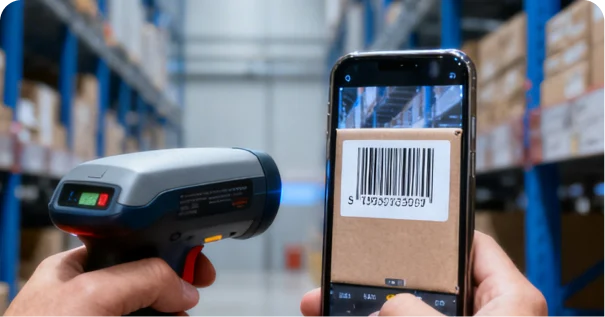
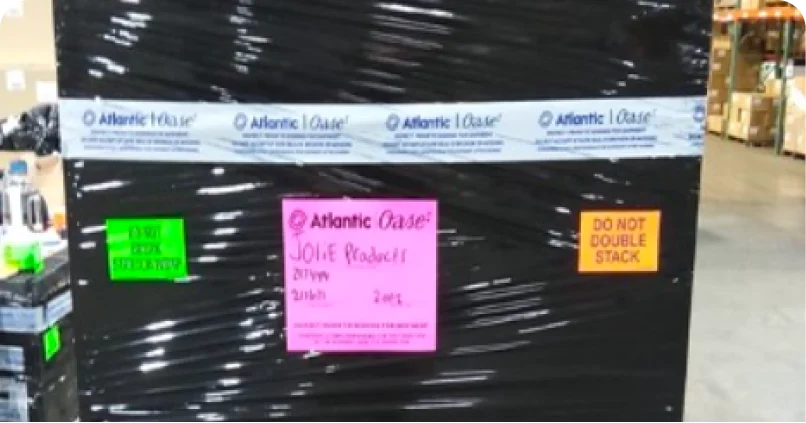
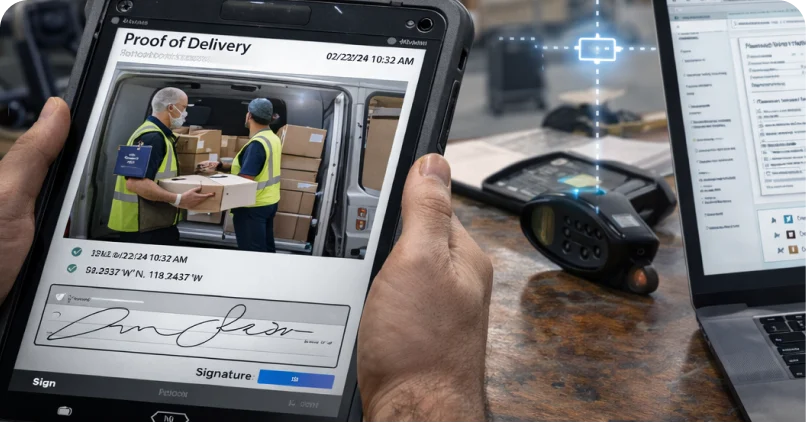
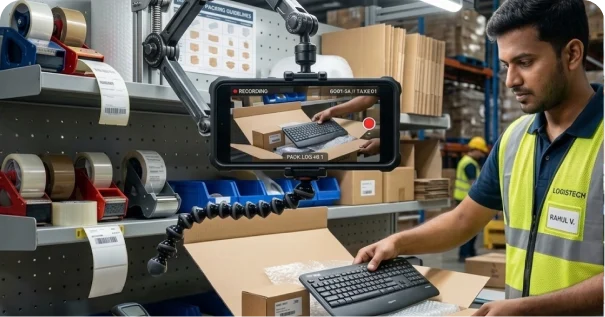
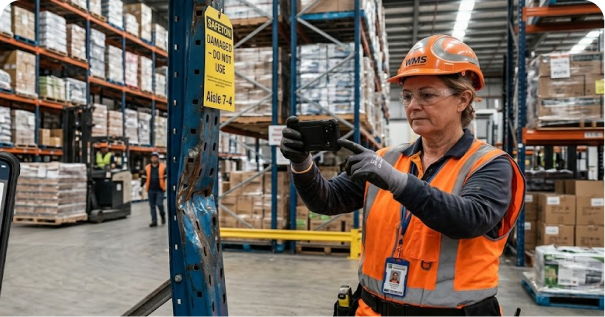
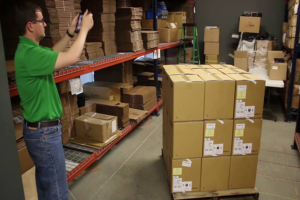
Step 2: Document the Visual Evidence While a written weight on a log sheet is helpful, a digital photograph of that weight—with the pallet and shipping label clearly visible is undeniable. This single photo becomes your “courtroom exhibit,” linking a proven weight to a specific order.

To strengthen your retailer compliance, capture these three elements in one frame
  1. The Scale Readout: Clearly showing the actual weight of the load.
  2. The Pallet Condition: Proving the load was fully stacked and secure.
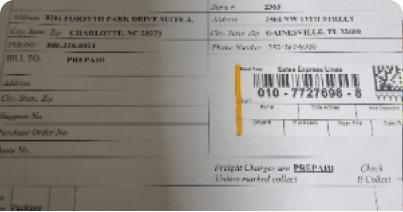
  3. The Order ID: Including the shipping label in the shot to tie the evidence to the specific shipment.

Why This Makes Your Job Easier

Implementing a “Weight-to-Photo” defense isn’t about adding more work; it’s about eliminating the “detective work” that happens after a claim is filed.

  • Protect Your Reputation: When a claim comes in, the office doesn’t have to grill the floor team about what happened. They simply pull up the photo and show the customer the proof. This shifts the conversation from “We think we sent it” to “Here is the proof it was there.”
  • Catch Errors Early: Checking the weight before the truck arrives allows your team to verify order accuracy in real-time. It is much easier to find a missing box in your own building than it is to track it down once it has traveled 500 miles.

Our goal is to eliminate warehouse shortage claims entirely. Combining scale verification with a quick photo is the best way to prove you are doing a fantastic job and that your warehouse follows the highest standards for outbound quality control.

Let’s put this into practice on the next three loads. Scale it, snap it, and ship it!
Share this Article
Dive Deeper