CSCMP Supply Chain Innovator of the Year Award – Finalist
Kenco Logistics innovates to slash customers’ chargebacks. We have three speakers. Christy Montgomery, vice president innovation, research, and development, Kenco Logistics services. Christie is responsible for leading innovation in the supply chain through value generation, research, and development of new solutions. She has twenty seven years leading supply chain technology and innovation initiatives for a top 10 North American three p l.
Sharon heard bachelor’s in organizational management from Covenant College. We have Rick Olson, executive director of Logistics North America Sealed Air Corporation. Rick is responsible for leading internal and three p l logistics operations in North America. He has twenty eight years leading supply chain execution for three p l and direct operations in consumer goods, building materials, packaging, medical, aerospace, and industrial sectors. He earned his bachelor’s degree in business administration from Ferris State University.
Puga Sankara, principal Smart Gap Gladiator LLC. Puga is responsible for bringing disruptive technology into into market to mobile enabled supply chains, founding and building Smart Gladiator into a niche tech company playing the CEO role. He has twenty years of supply chain system design, development, deployment, process improvement experience. Kuga founded Smart Gladiator in 02/2014 after earning his MBA at Georgia Tech. Please join me in welcoming Rick, Christie, and Kuga.
Thank you, Glenn. Well, welcome everyone. Thank you for coming to our session this afternoon. Wanna make sure everybody’s got plenty of caffeine because we want you to wait. We’re gonna talk about some exciting stuff that I want you to be in right for.
So we wanna talk today about a solution that Kenco Innovation Labs, which is a division of Kenco Logistics Services created called Low Proof at the behest of our customer, Sylvia. So, Glenn has already introduced us, but there are amazing titles for for your notifications. Sylvia, Kimco, and Smart Light Yielders. So this product was created as a partnership between the three companies. The customer bringing us their problem, us coming up with a solution, and then outsourcing that with Smartfly and Android to develop a solution.
So as you sit through this session today, there are a few things we’d like for you to take away with you. Innovation has to be customer centric. And that’s one of the things that I want to talk about. It’s one of the reasons why we formed Kenco Innovation Labs. Then we want to talk about how we’ve leveraged a startup to see the success of load proof.
We’ll talk about how we utilize rapid prototyping with a minimum viable product to bring this product to market. We’ll talk about how we commercialize the innovation load proof, and then who will talk a little bit about what we plan to do with the future of load proof. So with that, Rick, why don’t we talk a little about who Sylvain is? Tracy. So Silair is a, packaging company and recently just sold off one of the the divisions, about one third of our company.
Actually, I guess, our most recognized brand, you’ll you’ll know, is Crownback Bubble Wrap. The original inventor of the Bubble Wrap is our founding founder of, Seal Air. We have about 23,000 employees worldwide. We’re sitting down to about 19,000 now. So, couple of the, awards that we see on the right hand side, you can look down those.
Thank you very much for the opportunity to present the, present in front of this audience, and thank you very much for the opportunity, Christy. Basically, Smart Gladiator is a technology company that’s based out of advanced technology development center within Georgia Tech. I know many many people don’t know about ATDC unfortunately. That’s one of the largest incubator in the South. It’s like the incubator in the South.
It’s like a Y Combinator of the South. And with this, you know, so many companies have not only raised money, but grown so big, you know, starting from that incubator. So we are there and we are recognized as top 40 innovative companies in Georgia as well. And the mission of Smart Glady introduced to mobile enabled supply. We know we are all since 02/2007, ‘2 thousand and ‘8, I mean, the Apple iPhones and Android devices have changed our life upside down, right?
We are constantly sending text messages, receiving text messages, taking pictures and sharing it to our friends, you know, friends and family and we are taking videos and uploading YouTube, Facebook, so forth. So, the mission of SmartDynamics is to bring all those capabilities into the supply chain, into the distribution center. So, you know, it’s not just about data collection, but it’s also about, you know, collaboration. So that is, you know, really the mission of smart management. We’ve got tremendous reception for our product in the market, and people love using our product.
And it not only just improves productivity, it’s it’s so easy to use it. You know, it can onboard, new employees so much faster. And, you know, bringing all those capabilities into the supply chain and making life easier for operators, supervisors, managers, executives. That is the mission of SmartLadder value to them. That’s a quick introduction.
Thank you. So I’m here representing Cango Logistics Services. We are the largest proudly held, woman owned, 3PL in North America. And we are very blessed to have, year over year double digit growth. We’ve been in business since 1950, founded in Chattanooga, Tennessee.
And we have a number of customers in the top fortune 500. As you can see, some of the stats there are 30,000,000 square feet and 90 plus facilities across North America. We move about $75,000,000,000 product through our facilities every year. We have a little over 300 employees. I won’t read all of the awards that we have won, but we were very privileged to be in the top 10 inbound logistics for the providers again this year.
So, that’s a record that we’re pretty proud of and we continue to maintain. So, that’s a little bit about the companies that were involved in this, development. I’ll talk a little bit about now about why we do this. So Kimco formed our innovation lab about two years ago because we realized our customers were facing a problem with buzzword, not an executable solution. And we wanted to bring them a solution that can answer their pain points.
So I would I would caution that if you don’t have a problem, you don’t need to innovate, right? And I think everybody in this room has some sort of problem that you can take a look at and say, how do I innovate without that pain point? How do I look at that challenge different? So when you look at how we do customer centric innovation, this will make sense in a minute when Rick starts talking about his challenge. Our role in this was to to help our customers innovate around their supply chain.
They spend all of their money, time, effort, resources innovating around their product or their service that they offer. They don’t have a lot of dollars to spend around innovation in the supply chain. So that’s where we come in. And we we provide that supply chain innovation for the supply chain. Where we come in.
And we we provide that supply chain innovation to them and drive value to their bottom line. And then we bring those vendors to the table, whether they’re startups or they’re long term bidders in the software space or the supply chain space to deliver on those options. Our mission is not necessarily to invent something new, although you’re gonna hear about load proof today, which isn’t new, but it’s to find those solutions that are innovative and bring them to the table for our customer. So we have a supply chain focus. We are customer facing.
Most everything I do in my group is focused on our customers, not on our own internal business at Kymco. And we’re looking for that win win win result. So as we look at that, we talk about what we’re gonna talk about today, which is load proof. Here’s a little bit of an agenda on how we’re gonna go through this. We’re gonna talk about the challenge that Cildair specifically was facing and how that translates to the industry and what the industry as a whole was facing, customer chargebacks, retail chargebacks, customer complaints.
We’re gonna talk about the solution that we developed called load proof. We’re gonna talk about the results of that solution and what we’ve seen so far in its short six month life on the market, and then we’re gonna talk about the benefits of where we’re going with the future of load proof. So with that, I’m gonna ask Rick to talk a little bit about the challenge that Still There was facing. So, several of the, problems that we had, revolved around the customer claims. And some of them are real claims, and some of them are probably not so real claims as we all probably know in this business.
And, either way, you end up having a return of some sort, a credit, and or, damage on the way back. Those types of things that you have to deal with. So we had high customer complaints, pretty much resulting in in large credits coming back. You can take a look at, one thing being unpackaged incorrectly, refusing an entire truckload, and you’ve got an $80,000 claim, those those areas. And so, it it becomes fairly frustrating when you don’t know whether the three PL is executing to the SOPs to how they inspect our products before they go out, or is this a customer mishandling it and replace it, you know, and, sending it back after mishandling it in their own operation, or is it a transportation claim?
And they’re kinda stuck in the middle where either way, if you can’t prove where the damage happened or if the damage even happened, then, you end up with with a with a much larger problem, which is we need the whole bill. So we’re looking for ways to hold people accountable, and it’s not just about reducing the claims. It’s about holding people accountable to what, what is real. So the shortage claims, were all the pieces there? It seems really basic that people take pictures.
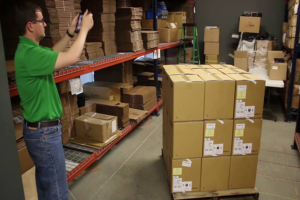
But, as as anyone that’s trying to take pictures in a large distribution center and where you access those pictures and how you go back and find a claim later. Just the information is hard to get to. The one you’re looking for, you don’t have those types of things. Sure, we’re following the process, but we don’t have the details, to be able to find it. So, that that’s kind of hanging the problem.
Our internal departments, in IT, have larger fish to fry. So we we turned to our three p l and said, hey. We need some help here. And that’s that’s how this goes. So I’ll talk a little bit about the industry challenge as a whole.
When we took Rick’s problem and we started doing some research on just what are our other customers facing and what are we seeing in the in the other warehouses that we have out there. We found that there were probably 80% of our customers facing the very same problem that their customers were charging them back. And for those of you who aren’t familiar with chargebacks, so so that’s when Rick ships his product to the customer, the customer accepts that and then knocks off $20,000 on the invoice and doesn’t pay them. Because they feel like there was either a compliance issue or something was damaged or the pallets were stacked properly. The label wasn’t on the right corner of the pallet.
It wasn’t shrink wrapped after. There’s a number of different reasons. Right? So that’s a chargeback. It’s when the customer actually takes a credit off of an invoice that that you already have and you have no way to prove did you do it right or did they mishandle it when they got there.
So when we looked at it at it, this is a a recent survey, by a consumer goods company that that put this out there and worked with Gartner to get these results. Chargebacks are 13% of retail account revenue. Now think about that. Walmart, Target, Walgreens, all of your major retailers are generating 13% of their revenue based on these chargebacks that they’re passing through to customers that they have no way to dispute. And so it results in lost income, lost income for our customer base, which we necessarily as a pre PL weren’t always seeing.
So this is why they brought us the challenge. They said, Look, you don’t see our invoices. We see them. But we have a major problem here. Something’s going on in the warehouse.
If you guys aren’t shipping it properly or our customers are passing chargebacks to us that aren’t aren’t actually charged by us. And so we need to figure out how we help you and help ourselves at the same time. So we took on this challenge. We we interviewed a number of our customers and we said, how are you doing this today? And as Greg alluded to, what we found is every single warehouse facility had a digital camera.
They were taking at least 50 pictures digital camera. They were taking at least 50 pictures per load, and then they were storing those pictures on the laptop. And as you all don’t know, when you have a digital camera and you download that little card into your computer, all of those those pictures come through as DSCUnderscore1034. DSC Underscore 10 30 5. And they have a data stamp and that’s all you know.
And those chargebacks happen three to six months after the fact. And so three months from now, my customer Rick is coming to us and and saying, Hammond, you look back at the load that you loaded three months ago on this particular date to this particular customer and find this shipment number. Guess what? That was either gonna take a ton of clerical time, two to three, four days maybe to find that, or we just weren’t gonna find it at all when he was gonna have to accept the chargeback. And every single facility was doing this.
First of all, it was like if they found the digital camera to take a picture before the shipment went out because they needed the shipment to go out on time. So just inherently a lot of problems with the current process as it was happening. So what we did is we put together some focus groups with our warehouse employees that were dealing with this problem today. And we said, what what are you facing? How are you handling it today?
And what would you see as the ideal solution? And then we wireframe that out. We simply did a PowerPoint presentation on paper and said, this is what the solution would look like. Does that work? The focus groups gave us some amazing feedback and said, you know, yes, this works.
No, that doesn’t work. Before we ever coded anything, two week period of time, by the way. And then we created what we call the minimum viable product. So I’ll explain that by saying if the customer wants a donut, initially, build a donut and give him the donut and see if he likes it. Don’t put one with sprinkles on it and icing and, you know, put cherry on top and all that.
Build the minimum viable thing that he’s asking for and then figure out if that works, right? So that’s what we did. And it took us about ninety days to prototype that with five of our different customers. One of them being Rick’s facility. Took about two weeks to develop.
In ninety days, we tested that. And so this is what we came up with. It’s called load load proof. And what it is, it’s an image capture app that runs on iOS or Android. It simply allows our warehouse workers to capture the pictures, input some information about those pictures, and quickly upload them to the cloud.
They’re done. They’re gone. Then the carriers, the customer service folks, our customers, our our customers, invoicing group, whoever it may be, have the ability to go into the cloud, take a look at those pictures, search by date, by shipment number, by load number, by bill of weight number, label number, whatever choice those fields are configurable that they want and find that information. And Puga’s gonna walk you through exactly how the app works, but it’s very simple. Seems like it was a no brainer, right?
But the system didn’t exist. In fact, we have a patent pending for this solution right now. So I’ll tell you a little bit quickly about why we chose to outsource at ChemCo Logistics Services as the name indicates is the logistics services provider. We’re not a software developer, we’re not a software marketing company, we’re not a software sales company. So we chose to go to market and find the right partner that could take the solution.
And as you heard Puga talking about mobile enabling supply chain, doesn’t that sound perfect for a mobile app? So we found those guys. And for those of you who don’t know, China is about two hours north of Atlanta. So reaching out to the Atlanta ATDC was an easy move for us. So we we knew that we couldn’t develop this and release it to the market.
Want So if you look at the timeline, it seems longer than it should be. However, the idea was generated in January. That’s when Silair came to us, January of last year. In February, we formed the focus groups, built a prototype, and then did a ninety day pilot of it. And then in June, from June through December, we chose Puga’s company, and we’ll talk a little bit about the commercialization of that in a little bit.
We applied for the path and we developed the solution and then it went to full release in February of this year. So you can see very, very short development cycle there and it is public today. So with that, I’d like to ask who could actually walk you through how the application works on on those sides of the app and on the website as well. So so it’s a it’s a very simple app. I mean, it’s not a whole lot of, you know, rocket science tool.
Right? I mean, what is the problem that we’re trying to solve? Right? We are trying to, you know, document pictures, document scenarios, document, you know, any exception, build pictures, and we wanna, you know, make sure that we can go back to those pictures, you know, in the future. Right?
So it’s important that, you know, we don’t the last thing we wanna do is add a bottleneck, you know, when the all these LTL pallets, all these, shipments need to go up. So we made it very, very simple. I mean, it’s a app that you folks can go to the website, loadproof.com, and then download it. I mean, the link to both the iOS app and Android app is in the website itself. So, you know, it’s download the app, and then, I mean, there is a little bit of an admin work that needs to be done, in the browser portal.
So, you know, set up your corporate, set up your site, and create your users. Very, very basic, because, you know, we gotta we gotta have that. Right? Only then we can properly give access to the users and managers and, anybody that needs visibility at the different level. So there is a really nice hierarchy that’s being designed as well.
So you folks could have visibility at the corporate level. That means, you know, all the, for example, a VP sitting at a corporate level can have access to pictures of all the sites. And then there’s also a network level. There is a VP or a account executive that’s managing relationship, you know, for a specific customer that’s operating multiple DCs or, using multiple DCs in Canco. You know, they can have access to all the sites specific to that customer that forms a network.
And then We’ve we’ve got a problem. They could have, you know, packaging livestock, red meat. We have about 90% of the red meat market. And if we’ve got a packaging a bunch of packaging going out there, it’s all preprinted. It’s for the, let’s just say, fourth of July launches, beef ribs or something like that.
And, we’ve got a packaging problem. We’ve got to jump in a hurry to make sure that we’ve got this taken care of. When we can hold our 3PL warehouse company, our 3PL transportation company accountable to make and then, of course, again, it’s just the LTL claims that our internal auditor department and our external auditors also enjoy the fact that we we have pictures of in to be able to prove the way they think they’re cleaning our facilities. So if you think about this and the broader implications of of the holy grail of supply chain, which is visibility, we all hear it all the time. Right?
I can’t solve all of it with this one tool, but I certainly can solve the condition of of the product from the moment it leaves the manufacturing floor to the moment it arrives at the customer facility. So if I’m capturing the photos of the product as it leaves the manufacturing plant, as it arrives at my warehouse, and as it leaves my warehouse, as it then arrives at a pool point or at a at a, consolidation facility, and then it as it arrives at my customer’s distribution center, and then finally, it potentially might end the customer. If I can capture those pictures along the entire supply chain, I can now provide visibility to the state of that product as it traveled along and potentially, identify some areas for opportunity data for us, whether it’s in the transportation line or it’s in the warehousing process or wherever the case may be. Even being able to go back to our customer and say, you know what, this packaging that you’ve changed to, which company has great packaging, but oftentimes we’ll find that the customer makes a packaging change, not understanding how it’s going to impact the supply chain.
Right? Now we have the ability to prove along the path as it moves and moves and moves every touch now causes us to have additional damage. And so potentially they should rethink that packaging. It’s not a supply chain issue, it’s an upstream issue. We have the ability to help our customers identify that.
So if you think about that kind of all the way through the supply chain, So I’ll give you some examples of additional customer benefits that we’ve, had with load proof outside of just Ritz operation. So, you’ve heard a little bit about the customer satisfaction portal. I can’t tell you how many comments I’ve received from customers saying this is such a great tool. I go in there and I log in myself, and I’m gonna have call the warehouse a million times today and say, what happened to this shipment? What does it look like?
Mine’s damaged? I have that ability to say, just log in and search for that particular shipment number, and they can find it and look it up for themselves. So it’s reduced a lot of clerical, time within our facilities with people calling and asking for proof of information. We have one particular customer who ships an awful lot of their product to Home Depot and Lowe’s as a consumer goods, durable goods customer. And, the constant complaint with that is your documentation is not right or it didn’t come with the product.
And we’re now able with load proof to show them that, yes, the documentation was there and it’s accurate as to what was loaded off the truck. And so we can push them directly to the portal, which they do. They send their their person to the portal and say, yes, we did, and here it is. And so, we’ve had that customer save a pretty good amount of money doing that. We’ve avoided some fines with DEA compliance in that we’ve been able to prove that we have the licenses to ship into the states that we can ship into again.
We’re able to send people directly to the portal. They can see proof that the license exists. And the product, status as it applies after a container on the ship. So we can prove that we loaded it on the container properly. So that again, it doesn’t come back to the charge against the customer or charge against us at our warehouse facility.
So, and these are results that we found after only four months end of market availability. So, a lot of potential opportunity with the product, and and we’re finding customers really, really love it, and it continues to to grow from the from the rollout. And I put these two, quotes on here. I’m not gonna read them to you, but what I wanted you to understand from this was, as Poon referred to it earlier, it’s just the simplicity of the accountable. It enables them to hold their teams accountable for what they did.
At a risk point, sometimes find opportunity for coaching their associates on how to do things better. They’re not quite following proper procedures. So these are a couple of our supervisors, operations managers who have really found the solution to be useful in helping them streamline process, and reduce man hours and, coach their employees about how to use the system. And, I’m not sure Rick made this point, but one of the one of the points on his slides was just that it was very easy to integrate into the existing process. It didn’t impact the timing of getting things out the door and of the employees being able to achieve their, same rules that we’ve created for them to hit in the warehouse as far as their KPIs.
So, it’s been a great process. So, it’s been a great process. So here are some things we are talking about doing with the system and the teacher. All of these are, in the patent application. The first two, I’m happy to report are one of them is done.
The second one will be done in the next few months, the, Excel export of the the picture file. So we’re well underway with with adding functionalities in the system. We’ve talked about a number of additional things. Could you refer to integration with your supply chain execution systems and and how do you do that to mobile enable the supply chain. So we’re working on that.
We’ve also had a number of customers request, hey. We don’t wanna use it on our mobile app. We wanna have a fixed map camera that’s just capturing information that we can go in and key in the information later and and upload to the cloud just like it does on the mobile app. So we’ve talked about how to do that. We’ve also talked about GPS timing the photos, which is a little bit difficult, but it’s something we’ve talked about and positioning within the warehouse.
What’s in the warehouse leaving in when we took the picture? And then can we upload videos? We’ve had a number of customers ask that question. Instead of just a picture, could we actually video what the lift driver is doing So let’s talk a little bit about the barriers that we faced and the lessons we learned as we rolled this solution out. A lot of our warehouse facilities being in the 3PL market.
It’s our customer’s warehouse management system. It’s our customer’s Wi Fi network. And a lot of them have really stringent security requirements. So we, we had to either do it in batch mode, which the system is capable of doing, or we use a cellular connection, which can eat into a lot of data requirements. So, Hugu and his team did a really good job of making those uploads extremely small from a cellular data usage perspective.
So we’re not talking about a lot of money and time and effort to upload that information. We we have it where they can we can set at the network level how large the pictures are from a from a, size perspective. So that as the manager or the administrator of the site, I can say, we want all of our pictures to be small because we know we’re gonna be settled. If I wanna last night, I’ve been working on care about bandwidth, I can make it a huge pile. So, we’ve also found interestingly enough as much as customers want to push back on the chargebacks, if they’re in a soft market with their customers, then they will say, I I I don’t know.
I don’t wanna make it mad. I mean, I saw it’s not a good time for us to be pushing back on our customers. So, they our consumers. So, they oftentimes will be reluctant to use the product for that. We initially did not necessarily create an online demo because we thought this was such a simple solution.
It should be fairly easy to grasp from just going to the website. However, we’ve had a lot of requests for that, so I’m pleased to announce there is an online demo now. And then it’s interesting the the impact that this has had on the clerical staff and the folks who actually process claims. So now to Rick’s point, customers know we’re doing this and so they don’t push as many claims through. So the claims adjustment staff is going, you’re gonna put me on the job.
And so they’re not terribly happy about this sometimes. So, and then we’ve also found that we were really targeting that chargeback issue. That was where we thought we were gonna really, have a product that was gonna solve the problem. What we found, and I think Reg Greg mentioned it as far as this quality internal audit group, is that there’s almost as much value for compliance and regulatory compliance and auditing as there is for being able to prove that you don’t need to be charged back for something. So side effect of having the solution is we’ve had an awful lot of quality uptake on on the usage of this product.
So, which is great. Love it. But it was a little bit unexpected. So, not as much of a barrier. Just a challenge as we looked at it.
We didn’t really build it for that solution. So we’ve had to add a few features to make it really work better for an audit functionality. So I’ll talk a little bit about, how we leverage the startup to do this and how we commercialize that agreement. So as we as we looked at the market and said, we have to find somebody to build this for us because that’s not who we are, that’s not what we do. We realized that we needed that partner out there.
We chose a startup company specifically because they could be more agile, they could be more flexible, and they were also more innovative, quite frankly. They were willing to think, bigger picture and how could they build this to to take it to market in a very different way than traditional software products go to market. So, there were three kind of key elements of the success is in the first I would say is not in this order but was the master services agreement. So we created an agreement with food and his company where we have the ability to now add on SOWs as much as we want to. And we can create more products by just simply having a safe and work for a brand new product.
And so that agreement’s in place between us and we understand how we can go to market agreement to anything we want to do from now forward. And we we also outrun that as a w what’s the product life cycle, what’s new releases gonna look like, what’s support gonna look like, all of those things that commercialize the dynamic between us. And then we developed a joint marketing plan because Cougar has a lot of customers in that space of mobile enabledness watching and we have a lot of customers as a freebie. So we said, how do you go market this? So, it was a great partnership leveraging a startup to do an innovative new technology release.
So with that, I would like to ask Prudha since he’s a primary marketer. What are the benefits as you’ve seen him of the system so far? I think I mean, even though we started this just for the load proof, you know, problem, right, I mean, the initial problem that we solved was to provide proof for all the loads that were loading the truck. But but, I mean, we all know, right, a picture is worth thousand words. And and and when we you know, talk to, other, people that have general issues, I mean, that’s part of our standard customer discovery process wherever we go.
We sit at least an hour with the supervisor, with the operator, with the end user and understand, hey, you know, what can we do to make your life better. Right? That’s a standard question that we ask. And and some of the things that came up were related to pictures. Hey.
If I can show picture when I have a client situation, if I can show picture, the problem is solved right away. No questions asked. It just makes my life so much easier. So, you know, where in all, you know, there is opportunity to, use pictures in your back up. So if I you know, there is a tool that is readily available either in the form of, like, a mobile device or something else that I can, you know, leverage in my, you know, job, in my, you know, daily function, all the
CSCMP Supply Chain Innovator of the Year Award – Finalist – Kenco Logistics, Sealed Air & Smart Gladiator Loadproof – Finalist Presentation at the 2017 CSCMP Edge Conference, held in Atlanta from September 24 to 27.


 1. Increases EPP, using budgeted line items.
 Millennial friendly technology, less onboarding time, very easy adoption – touch screen keypad, and 43% of Millennials already use IOS, familiar with Facetime, 85% of Millennials aged 18-24 own devices and 86% aged 25-34 own them, consume a lot of video on their smartphones, and are highly comfortable with this medium, they understand and like apps.