














Proudly Located at the Advanced Tech Dev Center at Georgia Tech
OUR BLOG
Best Practice – Apply 1” Dot sized/Colored Label per SKU for easier identification

Optimize Your Supply Chain and Eliminate Multi-SKU Pallets Shortages with Color Dots

If you work in warehousing, fulfillment, or logistics, you know the sound of a customer complaint: “We’re short on the delivery!”
It’s often not a real shortage, but an inventory discrepancy caused by miscounts at either end. And the most common culprit? Multi-SKU pallets are those mixed pallets containing several different product types (SKUs) stacked together. These mixed pallets are essential for efficiency, especially when shipping to smaller retail stores or distribution centers with lower volumes. But when the trailer door closes, all those carefully mixed boxes turn into a complex puzzle.
When your customer is unloading a pallet containing, say, 10 cases of Product A, 5 cases of Product B, and 12 cases of Product C, it’s incredibly easy for their receiving clerk to mistake a case of B for a case of C, leading to that dreaded “shortage” report. It’s frustrating, costly, and completely avoidable.

The Simple, Dollar-Store Solution

The best solutions in supply chain optimization are often the simplest. The solution to this multi-SKU headache is a common, inexpensive item that can be purchased in bulk: 1-inch colored dot labels.The best practice is to apply a 1” dot-sized/Colored Label per SKU for easier identification/distinguishing of SKUs. This best practice transforms a confusing, homogeneous stack of boxes into a clear, visual guide for your team and, most importantly, your customers’ receiving crews.

How It Works: The Color-Coded System

  1. Assign a Color: Before picking and staging the order, assign a specific color dot to each unique SKU on that pallet.
    For example: Red Dot for SKU A, Green Dot for SKU B, Blue Dot for SKU C.
    For example: Red color dot label for SKU A, Green color Dot label for SKU B, Blue color Dot label for SKU C.
  2. Apply the Dot: When the warehouse team picks a case for the pallet, they must manually affix one 1-inch colored dot label onto a visible side of the box.
  3. Visual Confirmation: As the pallet is built, it visually transforms. Instead of a solid stack of brown boxes, you now have clear color markers identifying exactly what is what. The use of multicolored round stickers provides instant, irrefutable visual segregation.
  4. Count by Color: The shipping manifest should be updated to reflect this system:
  • SKU A (Red Dot): 10 cases
  • SKU B (Green Dot): 5 cases
  • SKU C (Blue Dot): 12 cases.

The Final Step: Get Photo Proof

The benefits of this simple change cascade throughout your operation and your customers.
  1. Faster, More Accurate Counting: For your customer, counting is now a breeze. They don’t have to squint at small case labels or UPCs. They simply count the red dots, the green dots, and the blue dots. This immediate visual confirmation drastically reduces human error and is a massive win for customer satisfaction because they get accurate counts and can put product away faster.
  2. Clearer Loading and Auditing: Your outbound shipping team can now conduct a quick, final audit before the pallet is wrapped. Is the manifest calling for 10 red-dot cases? A quick scan of the pallet confirms this. This simple step serves as an effective quality control point, reducing the chance of an internal picking error making it out the door.
  3. Optimized Warehouse Operations: Implementing this method standardizes the process for handling mixed pallets, reducing training time for new employees and minimizing confusion. The clarity of the visual system helps speed up the picking process itself. While it adds a few seconds per case to apply the label, you save minutes of audit time, hours of customer service time dealing with shortage claims, and the high cost of re-shipping missing product. This better control over physical counts is a direct enhancement of your inventory management processes.
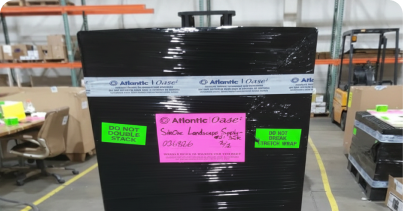
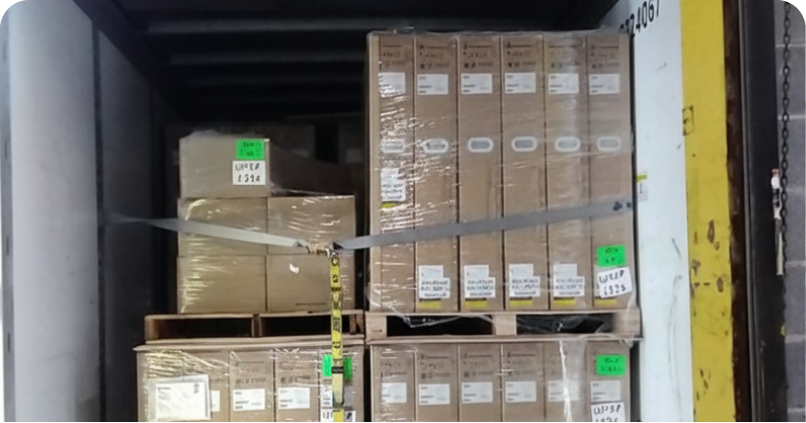
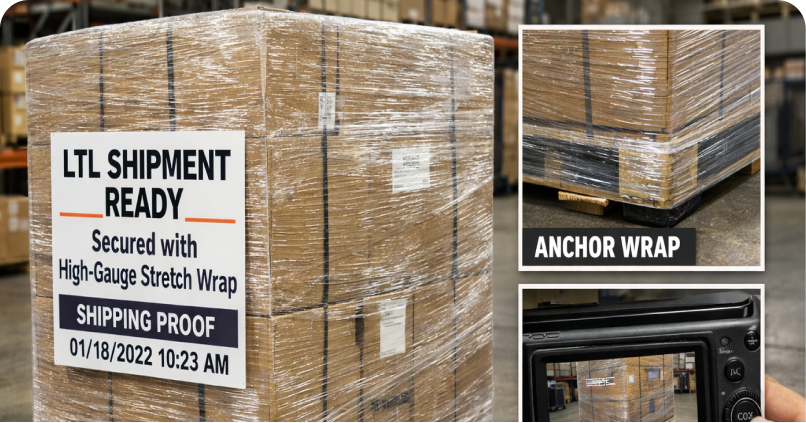
Finally, to ensure complete protection against costly shortage claims, make photo documentation the final step in your process. Once the color-coded pallet is built, wrapped, and passes the final audit, capture a clear, high-resolution image of the entire load. This photograph visually confirms the correct count and SKU segregation as the pallet is ready to ship. Storing this image digitally and linking it directly to the shipment record provides irrefutable proof of the contents and condition when it left your facility and that is your strongest defense against customer disputes.
If your business relies heavily on mixed shipments, fixing the multi-SKU pallets issue is a critical step in supply chain optimization. The root cause of a “short” report is often a lack of distinction. By applying a bright, highly visible 1-inch dot label per SKU, you are manually creating that distinction. You are giving your customers’ receiving team the simplest possible tool to do their job correctly.
Share this Article
Dive Deeper