








Proudly Located at the Advanced Tech Dev Center at Georgia Tech
OUR BLOG
Use Load Straps to secure Pallets

Why Load Strapping is a Non-Negotiable Safety Standard

In operations, we obsess over throughput, labor efficiency, and order accuracy. Meanwhile, one of the biggest sources of preventable loss quietly sits at ground level: unstable pallets. A pallet that won’t stay upright isn’t a technology problem; it’s a fundamental problem, a direct challenge to achieving reliable Cargo Stability in Transit.
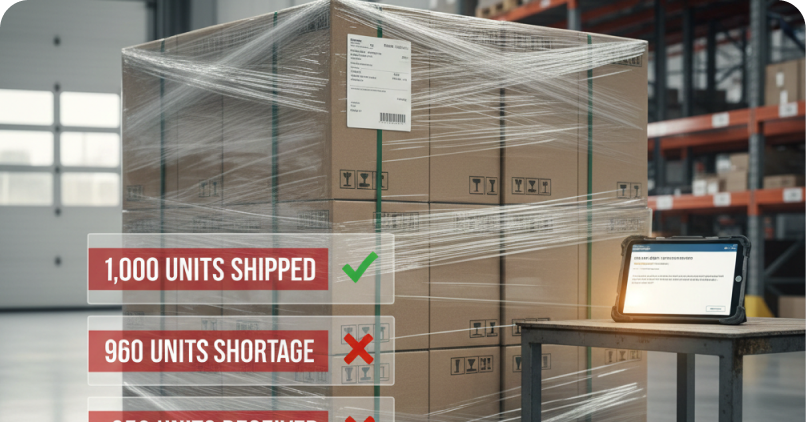
It’s frustrating because a tipping pallet is always more than just a mess. It means product damage, serious safety risks for your team, costly claims, and a major headache for everyone involved. We invest in advanced WMS and efficient racking, but the most basic link, load stability, is often where we fail at Reducing Shipping Damage and lose the most time and money.
We’ve all been there: the first reaction to a wobbling stack is always, “Just put more stretch wrap on it!” While film wrapping is essential for containment, it critically fails to provide the one element needed for true stability: compression.

Why Do Pallets Tip? It’s Usually One of Three Things

The problem is simple: stretch film only provides lateral containment, not compression. It holds things together side-to-side, but it can’t anchor the load down. This means road forces cause layers to lift and “walk,” separating the stack from the base. When that unit load integrity fails, the pallet tips, undermining all efforts at maintaining Cargo Stability in Transit.
Before we get to the solution, let’s diagnose the common triggers:
  • The Unstable Base: Loads that are unevenly stacked or overhang the edges shift the center of gravity, making the entire stack unstable from the start.
  • The Containment Trap: Relying on stretch wrap alone. It contains, but does not provide the downward force needed to lock the load to the pallet.
  • The Stationary Mindset: Evaluating stability only in a controlled environment. A truck is a dynamic, moving environment that will exploit any weakness.

The Fix: Strategic Load Strapping

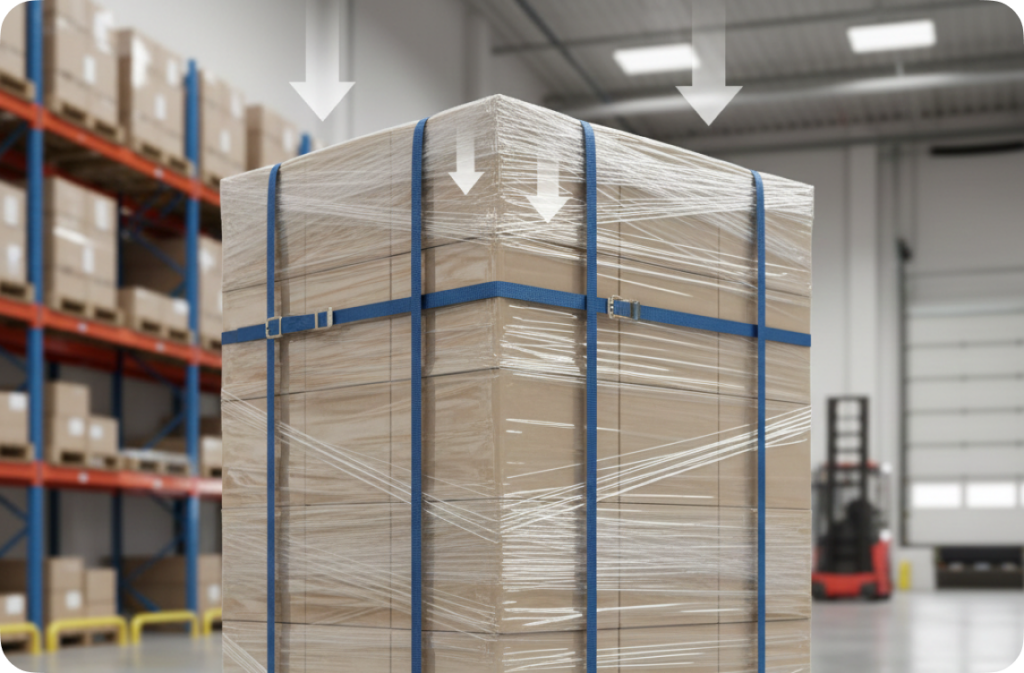
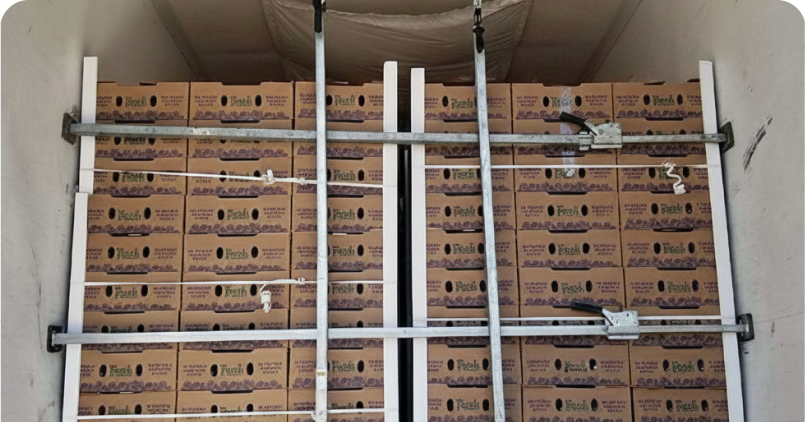
The simple, most effective solution is integrating a robust load restraint system: Load Strapping to Secure Pallets. This technique should be adopted immediately as your Warehouse Safety Standard.
Load straps are not a replacement for stretch wrap, but a crucial supplement. They act as an anchor, applying the necessary downward tension to compress the entire stack onto the pallet base. This friction turns the load and the pallet into one cohesive unit, dramatically resisting the forces of the road.

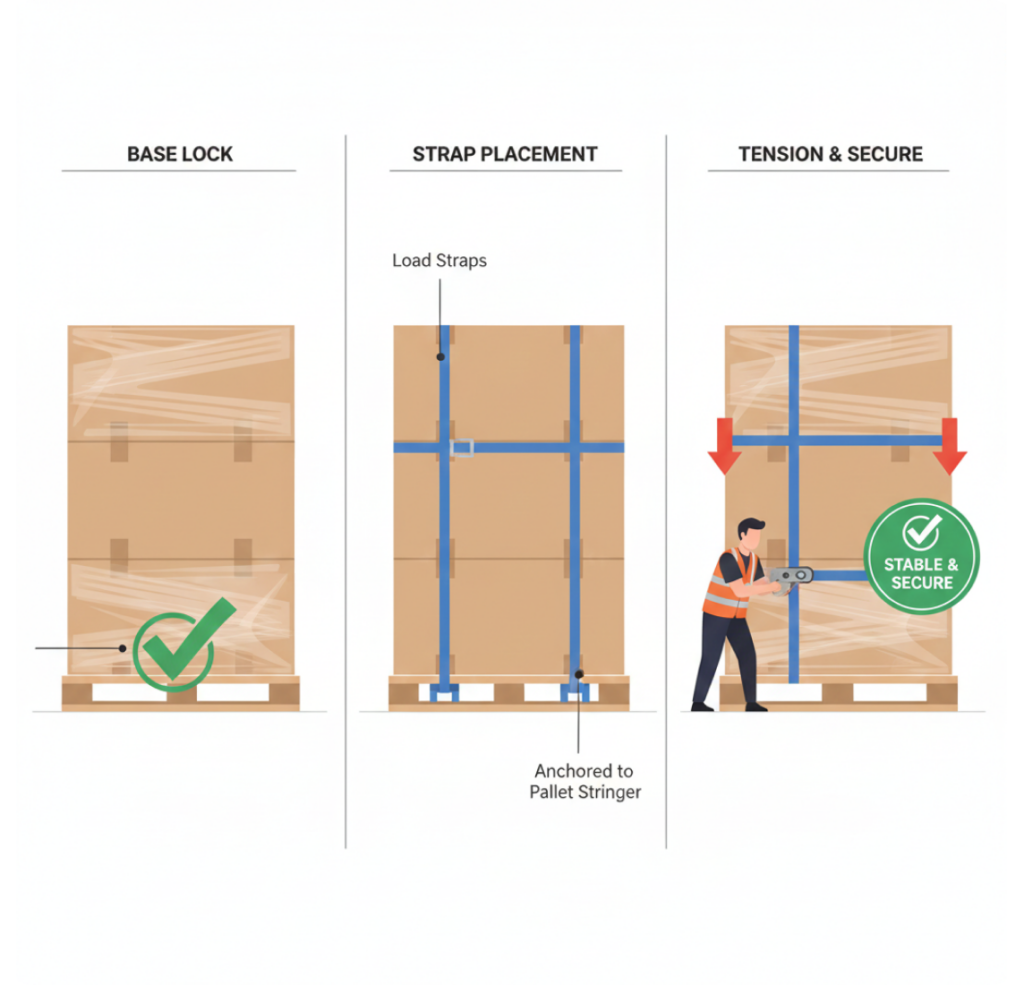
Actionable Best Practice: The 3-Step Anchor Check

Your team can implement this process on the floor immediately, especially for tall or mixed-SKU loads:
  1. Finish the Wrap: Complete your stretch wrap, locking the film tightly around the pallet base.
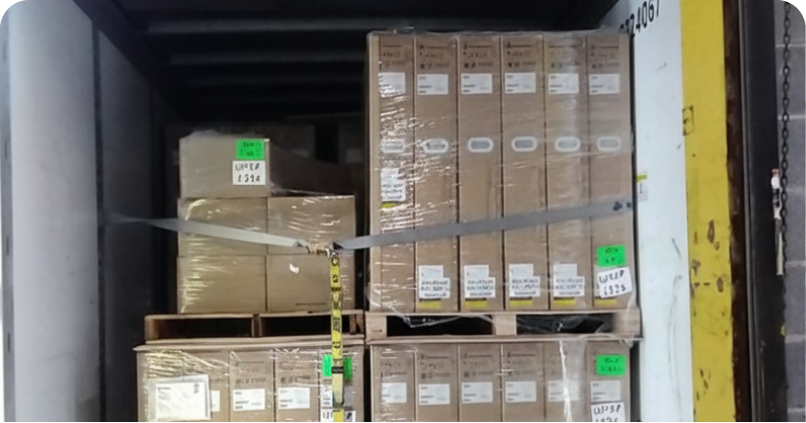
  2. Apply the Strap: Run one or two durable load straps over the highest, most unstable points. Crucially, anchor the strap ends securely to the pallet stringers (the wooden runners beneath the deck boards). This is the foundation of effective Load Strapping.
  3. Tension to Lock: Use the ratcheting mechanism to apply a strong downward force. The goal is to eliminate all slack. When correctly done, the load should feel rigid and resist manual wobble.

Empowering the Team and Protecting the Product

Once your load is stabilized, the final, non-negotiable step is photo documentation.
Clear, timestamped photos of the finalized, strapped pallet are your team’s most powerful defense. This provides irrefutable evidence that the load left your control is secured to best-in-class standards, which is vital for quick claim resolution and protecting your operational integrity. Furthermore, these photos set a visual quality control standard that every worker can easily replicate and audit.
Implementing this simple best practice immediately upgrades the quality of your entire outbound operation:
  • Team Safety First: You create a safer environment, protecting both your warehouse team and the drivers who move your goods, making this a true Warehouse Safety Standard.
  • Efficiency Gain: Every pallet handled with confidence is a pallet moved quickly. Faster, smoother unloading at the destination saves everyone time and increases throughput.
  • Build Trust: Delivering perfect freight consistently is the foundation of a strong reputation with customers and logistics partners.
This comes down to practical, everyday knowledge, not complicated technology. Start by identifying the loads most likely to shift, apply strong Load Strapping for reliable Cargo Stability in Transit, and make sure the quality is clearly documented. Small, consistent improvements in the basics can make a meaningful difference in Reducing Shipping Damage and cost.
Share this Article
Dive Deeper