I think we are ready to get started. Doors are closed. So, folks, we are going to get started. Thank you very much for coming by. My name is Pugar Shankar. I’m the principal with Smart Gladiator Loadproof. So I thought, you know, obviously, right, I mean, I’m not going to call my baby ugly, you know, our product. So I got a nice friend of ours, Mr. Ross Chesney, head of operations with Carrick Butte. He’s going to talk. So ask any questions you want. I’m just going to go. Any product-related questions, I’ll be happy to answer. But you really want to hear from them. They implemented it. It’s like it opens up. It’s a movie. That’s the challenge that they worked through and solved it. So, you know, I’ll, so, you know, my, you know, just a quick introduction of myself. I’m a principal founder with Smart Gladiator. You know, we, I architected, created, load-proofed, you know, in partnership with Kenco. We had a similar software and we kind of took that to the next level, made it a software as a service. I know my experience, I cut my teeth in supply chain when I was with Manhattan Associates. Spent a lot of time there and I also did MBA at Georgia Tech, so 25 plus years in supply chain. A lot of WMS implementations, a lot of back house performance, throughput analysis, you know, all kinds of things. So I’m going to pass it to Ross here. Ross here.
Ross, thank you very much for doing this. No problem. Alright. So, Ross Jasanich, thanks for the intro, Puga. He said I can say whatever I want. That’s a risky risky proposition. So, I started my career in the military. That’s me when I was 12. Been in retail supply chain for about 12 years now. Home Depot was my first corporate role in corporate supply chain, PMO kind of strategy role, implementing mechanization. I jumped into warehouse operations, so that’s where I first was exposed to Loadproof. We were doing retail consolidation at a small 3PL out of New Jersey called Fusion Transport. I was just talking about Walmart implementing the SQEP, Supplier Quality Excellence Program, I think. So we had our customer base massive potential chargeback exposure during that implementation. So we implemented load proofs base application where we were taking pictures of every load and were able to help our customers buy chargebacks there. From there, I went over to L’Oreal, had a fun time in manufacturing during COVID. And most recently jumped over to a company called Caring. If you’ve heard of Gucci, you’ve heard of Kering. And click. Or not. Can I do it? Yeah. Good. So, that’s the wrong one. Not a word. Not a word All right But if you heard of Gucci you heard of Caring So Caring owns Gucci Saint Laurent a bunch of luxury apparel brands that you probably heard of About two years ago, they decided that they were going to stand up a beauty division. so right now in luxury and really apparel most companies are not doing their own beauty they’re outsourcing to the l’oreals of the world and they’re finding now it’s cheaper it’s easier to merchandise to insource beauty caring did it with eyewear in the early 2000s so we’re really diversifying the group through acquisition and bringing in those licenses so so caring bought a fragrance brand called Creed. Creed is one of the larger, high-end men’s fragrance brands.
So I brought a little friend of mine. This is our newest launch. $610 for $100 a ml if you’re interested. You can come up here and smell it after. After. But it’s my personal favorite. This is the best smelling I’ve ever been in my career, which is a major perk. But the problem with that is it’s a very popular brand. Like any popular brand, people want to steal it, especially in challenging economic times. So we all deal with this ugly monster. And I’m not talking about the Lord of the Rings for my fellow nerds there. If you want to talk about that, you’re at the wrong conference. so they there was one issue when I was interviewing to come over to Caring that they wanted us to handle and that was concealed shortage chargebacks so this is the average outbound pack of Crete so we ship about 70% of our revenue to department stores you’re mostly like Neiman Marcus, Saks, Bloomingdale’s, Macy’s, Dillard’s. We have about 10 of our own bookings. We have our own e-commerce site. But about 70% of it is going to our retail partners.
Two retailers in particular, they’re saying, well, you know, you shipped us 72 cartons. We got all 72 of them. But here’s a 20% chargeback. Now, when we’re talking about the average shipper has about 27.2 of these cartons in here. They retail almost $500 a pot. So, your cartons retail is ranging between $10,000 and $15,000. Your pallet of 40, you can do the math. So we actually had a shipment in like February 2024 with $400,000 of concealed shortage chargebacks on one trailer off of one purchase order between two grants, which I’ll get to that in a second. But anyway you kind of understand the problem and the magnitude of this It killing our revenue It killing our margin Retailers are screaming We under expert terms so it a complete customer collect freight network And it’s in that gray area of the collect network where they’re saying, the cartons are perfect. Your warehouse is just short shipping us. Hold your warehouse account. So there would be just accounts receivables screaming at me saying, what’s going on? Somebody’s stealing somewhere. Do something about it. We didn’t have any conversations with the retailers. We didn’t have any contacts. And we needed a way to kind of get their attention to start a conversation. And kind of most importantly to the powers that be, we either need to hold the 3PL accountable or we need to get these retailers to the negotiating table. and then protect the brand, because if it doesn’t make it to the retailer, we’re getting hit twice, right? We lose the revenue, we lose the product, and then we’re cannibalizing our own sales when it ends up on the black market. The black boxes, those are our number one seller, Aventus. The Aventus line represents a quarter of our business, so we have to stop the black market, then that’s a super high priority. Alright, so I mentioned when I was with Fusion like five years ago, I had conversations and a very simple implementation with some quick wins with load proof. So we had this idea where the only way we weren’t, our goal was never to catch thieves. We knew that there were thieves somewhere. Some bad actor had to be doing something that we didn’t want them to do. We knew that we couldn’t start there. We had to prove that either the 3PL was doing something wrong or that something was happening outside of our building. So we developed this idea of perfect video chain of custody. So if we could say, you have a box, and you can watch, like we can show you everything in this box, you can count the units. Like if I was to figure out one way that I could prove definitively that we shipped in full, I’m going to show you every single unit. So I’m going to show you every single unit. I’m going to show you the box getting sealed. We’re going to have some kind of tamper evidence something to seal that, and then we’re going to monitor it until it gets out the door, until your bill of lading is being sent. So we just, like, I had a team of, at the time, three people. How are we going to do this? I don’t have a dev agency. I don’t have any. So reach out to Puga’s team and we started putting something together and actually went from requirements to production in like three months. So there we go. So the requirements. So we started out and I would say we had a very we been with the same 3PL partner for 29 years and they were skeptical of anything that was one of course they were skeptical of adding labor adding time you’re gonna pay like you’re gonna pay for every second of our time that that this adds kind of mentality initially they didn’t really want to play ball until we brought them into a conversation with Loadproof, and Puga’s team really was focused on the end user.
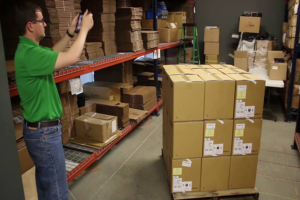
So the first requirement that we shared is, like, we have to get these guys on board, and we sold that to them by saying, like, we’re designing with the user in mind, and two, like, we also, right, like, we’re also protecting your reputation here because in fragrance, like at this level of fragrance, the buyers all know what’s going on. They know there’s us and there’s another major brand owned by LVMH in the same building having the same problem. And they talk. They know. The supply chain and loss prevention people they discuss this type of thing. We started there. Brought them into the conversation. We told load proof team like this is the data that we want to pull, we want to capture videos, that’s what we need to figure out how to do. We need to see cartons getting sealed under a camera. And we want to somehow tie it to what we’re shipping so that we can actually use this to fight a chargeback. We need to be able to get this stuff out of the system pretty easily, respond to chargebacks very quickly. And we need to be able to get this information, this massive amount of video, to a retailer without destroying them with gigabytes of information. So that’s kind of where we started. And my Bluetooth stuff. So not my favorite picture. And how we got there is we had our 3PL. We got them starting to come to the table. and these guys put together, they had an existing label that they were using for pick and pack. So they came up with the idea to add a QR code, and we were able to get all of the metadata we wanted onto that QR code, onto that label, so that we could transfer it to load proof. And the system, the process that we ended up designing, so that they’re picking straight into this box, and when we’re ready to seal the carton, the 3PL is scanning that QR code and initiating the video, and you get all of this data up in the cloud. So in this way, we’re kind of continuously flowing video up, and we’re getting it pretty much in real time. To deploy it, we were grateful enough to have a resource directly from Load Proof on site, did our UAT, got it going. very quickly and honestly we started having conversations and demoing this technology with retailers the next week I’ll pause there all right this is actually so this is the portal this is a live site I think the internet might be not showing up. Yeah, I think I’m seeing it here. Oops, let me clear up here. Ah, okay. So this is a live purchase order. Oh. And so you can search by anything. Like I can pull a purchase order. I think this PO had something like 50 cartons on it. And click a video. So I can pause it. I can zoom if I need to. We had the system carton count added in here so we can see the theoretical number of units that the system is saying should be there. And we’re getting that sealed. So a really simple concept, but it’s the speed to value that we were able to get with load proof that really made it happen for us. All right. So what actually ended up happening? So this is kind of the cool part. So we spent, you know, we spent a couple months. We spent a couple months filming this. Spent a couple weeks implementing it, getting it stable. in parallel doing our publicity tour with the retailers, we actually started to have real substantive conversations where loss prevention professionals from Bloomingdale’s, Nordstrom, Nevens were reaching out to me and initiating conversations to see what was going on, to see what we had going. within about a month of our conversation I won’t say who but the two retailers we were having challenges with reached out they wanted to do a DC visit with a 3PL which is generally normal but they also were bringing us in for the first time with state police I reached out and I mentioned we’re carrying our number one arch nemesis is LVMH. So we reached out to my LVMH counterpart, we brought them into the conversation and then there were two other luxury groups that we were able to kind of through old fashioned detective work figure out we getting hit by this as well that we brought into the conversation so we got all of these people into the room which I believe that would have never happened, there would have never been a conversation that would have been anything beyond adversarial without load proof but we got all of these people in the room and we started actually making a plan to set traps and try and catch the bad actors. Within three months before we did actually catch any bad actors, we received their first offer for settlement for chargebacks that was in the high six-figure amount. We rejected it. We’re like, no. Our warehouse is actually, I have to say, I was shocked at the level of accuracy that I was getting from my warehouse. It did wonders for my level of trust having operated in 3PL in the past myself. It did wonders for my trust in them and my relationship with them on my side. But we initiated this task force, and with some other technology that we implemented as well, we’re able to actually track and figure out where our product was being taken after it left our warehouse and deduce roughly what was happening. So what happened, what was actually happening was the driver would come in and they would do a pick up for the two brands and they would go off site somewhere on their way to their third party terminal, maybe for 20 minutes, which was the shocking piece, and they would gut our cartons, they were ripping them open from the side seam of the shipper, and pulling as many units of whatever they could find out as possible in the shortest period of time possible. And we were able to see the UCC labels between the period that they left RDC on our video and the time they reached the LTL terminal, they were being inverted. They were being tampered with. So the police were able to narrow down to a couple, it’s not a couple, maybe like 20 drivers, and they weren’t able to make any arrests. But they were able to get enough on the guys where the carrier was able to terminate the bad actors and get them out of the supply chain. So that was about, what? That had to be about 14 months ago. Back in September, and I’m getting a little off topic here, but back in September, I get a call from our FedEx rep, and he’s stating that a trailer went missing, they don’t have very much more information. We do a little bit of investigation, we look at the camera, and there was, when the driver, when a FedEx driver went to pick up a drop trailer after hours a van pulled up in front of his trailer or his truck and held up the guy and hijacked his trailer And he took about half a million dollars worth of our product This was kind of the mistake that we were, we hope that doesn’t happen, but from an investigatory perspective, this is the type of mistake that leads to arrests. So the driver was okay, and it did lead to the arrest of four people who we were able to link to the original factory.
And we’ve been, everybody lived happily ever after, but no, we’ve been at around 99.95% accurate ever since. The value, I’ll kind of bring it back to the value of load proof. so about two months ago to kind of juxtapose the initial conversations of Blaine with retail partners to about two months ago I got a phone call for a chargeback of about $100,000 and it was it was very difference. It was more along the lines of, hey, can you send me a file with the links to the video for this purchase order number? We really needed whatever documentation you have so that we could file a claim with our carrier. Completely different than circa 2023 where I’m not getting anywhere with these guys. I can’t even get a contact in their transportation department to change the routing. So, to kind of bring it back, right, load proof did not actually prevent chargebacks for me back in 2023. Or even now, and I’m sorry, Kuka. What it did do is it changed the conversation. Right? We now approach this problem from a position of authority. We know what’s happening in our supply chain because at least this small portion of our supply chain, because we have almost complete information up until the moment that the project gates out of our warehouse. We’ve been able to increase our clean recovery rate when we’re shipping prepaid as well, not working with FedEx, UPS, other carriers as well. So it’s really been like, I mean, for an initial investment to have an ROI in like the low seven figures, it’s an easy sell to any finance professional I’ve ever worked with. And it’s not over because if you walk down the hall, I don’t think you’ll make it 20 feet without somebody trying to approach you to speak about AI agents. So it not over We haven started to leverage some of the more recent innovations out there So we have explored These videos are in the cloud They there We have four months of archived footage that we can research whenever we need it We can pull it down and archive it in perpetuity if we need to. but we have started research to have an agent skim our videos every evening when they’re uploaded and we’re already passing the number of units that each car should have to load proof so if we have clear consistent video it is not theoretically that difficult to actually conduct a visual machine learning based on it of what you’re actually shipping. So the idea here would be now you can set up a configuration where you’re getting alerts of possible short shipments before the freight even leaves your warehouse. And you can send a clerk out, you know, you can send somebody making $15 an hour out to the floor of a warehouse and they can spot a charge, like they can eliminate a charge back for you before it even leaks. We’re also looking at applications in retail operations as well. So I mentioned boutiques. The, like I said, they’re a step in every aspect of our supply chain. So, when we have a shortage in boutiques,specifically where we own the entire supply chain gate to gate, we’re looking at having our clerks have a dedicated device that they receive just to document images of what they get. So it’s there if we need it. And then lastly, also looking at some consolidation opportunities. So turning our USDC into a central hub for other markets outside of the US. So when you’re dealing with Customs and Border Patrol, I mean, the US, from a customs clearance perspective, we’re one of the easiest customs agencies to deal with in Americas. When we set up CFS later this year, we’re going to want perfect documentation to ensure that whatever disputes may arise that we can show when this pallet gated into our CFS it left in perfect condition it was not altered in any way whatsoever so yeah I don’t know what else I could say it’s been a real great experience over the last two three years on this project specifically. Great custom solution that we were able to build with Puga and his team. Let’s open it up to you guys for questions. So you showed video of the product being packaged, but I’m assuming there’s other cameras in the facilities that it’s tracking. So you’re packing your package all the way into the truck, right? So that you
don’t have to clean that packaging area in the truck. Yes, so we implemented, so we found that 3PL’s cameras weren’t high res enough and we were looking for something that was super quick to implement. So we installed a couple of, I don’t know if you’re familiar with Burkata, just power over Ethernet cameras. We put four of them in overhead. Also another quick solution, probably about two months to implement. What about the picking point? So for this we didn’t focus on the picking point. We were only focusing on the moment.
Are you concerned they were taking a product out of the box and re-closing the box in a case pack? Because the box is in the picture of your packout, but if the product is going to move from the actual product packaging into your case packout, you’re still getting an image of an item in a box. So we also implemented a scale on the pack station as well, so we’re collecting actual weight. And we had intended to, I think we had spoken about passing the actual weight into load proof as well, but we ended up passing it into the ASM. So we have the ability to audit actual versus theoretical weight. We don’t. We haven’t really had a need to. But that was our, we did get that question as well from retailers. So the workforce, how did they perceive it? If you’re an honest workforce, you probably appreciated people confusing the ceiling. If you’re dishonest, you probably . Did you get any, was there any issues with the workforce, or is it just, this is what it is, making sure you get these back? Did you get any dynamics there? I mean, it was four or five people impacted by this process change. So we were really close with them. We brought them in early on. We explained the problem. So to be blunt, if any of them were bad actors, we were observing them. We wanted to see if they were going to react. But it was largely bad. I think we were benefited by our history with the three field as well because that 29-year history, we had a lot of employees who felt passionately about the brand. so when we brought them into that design phase and we’re like, well what do you think about what if we position a scanner here and we get their feedback in the design process getting them in as early as ossible kind of brought them along with the journey and we didn’t get much pushback I think most of the pushback was with the owners because they were skeptical there had been a history of this was a problem that was going on for five plus years and there had been a history of finger pointing between my organization and the 3PL, so we had to get past that. And once we got them we didn approach their people until we got them fully on board I mean honest people would probably appreciate proving that they honest But you know that one side And to that as well, like I mentioned, there was a second house on the other side of that warehouse that was a competitor, and the owners of our 3PL, like they asked, were very gracious. They were like, do we have your permission to show them to make this introduction to Love Proof. Yeah, sure. This investigation wouldn’t have worked if they were bad actors. They could have said no. As someone who’s run buildings in the past, I I would sooner I would share a video with a customer any time of day, whatever you needed. I don’t know if I would feel great about you putting your cameras in my facility. And speaking to those more concerned with Verkada with that, but I mean the fact that they were willing to do that made this entire thing possible. Is there any added time to the mapping from it, or is it just a QR scan that takes 30 seconds? It’s a QR scan, so we kind of based it off of self-checkout. So the pickers were already applying the label we added a QR code to off of a head printer, so that was no time added. We just moved where they were adding donage, like from a cart to a pack table, and we had it so that they rotate the QR code past a fixed scanner and just pulled it open for a couple of seconds. So in aggregate, like I think we time studied it, it was like a couple of labor hours a day during peak. Nothing that required any staffing changes.
Just a question regarding the video itself. Yeah, absolutely. The video is there, do you have things built in to make sure that the video quality is always consistent? Yes. Because you’ve got kind of like one opportunity. opportunity. I think the way that we implemented that was obviously right it’s a packing station packing station packing table and then the you know it’s a Samsung tab active tablet that has a really good resolution high resolution and that was mounted and there were markings on the backing table itself so they were supposed to keep the box you know within those arking and then it would and it would directly focus on that and then it would capture a really good quality video. Yes, and we didn’t have anywhere, there was no pushback from the retailer or anybody saying that, hey, we are not able to punch the video, the video quality is not good, or the clarity is not good enough But you also have another app that you put on the tablets so there another app that you put on the tablets that locks the controls Okay Only managers have access to the code to unlock those tablets So they’ll check the tablets. They’ll full cycle reboot them at the start of every shift. They check the queues to make sure that, like, for whatever reason, if Wi-Fi goes out, that we’re able to fix it and we’re not queuing up too many videos on the device. And they have the ability to lock the tablet so that somebody isn’t messing with the frame or anything, the Zoom or anything. There were some extra, you know, proactively we wanted to, I mean, obviously, right? I mean, you know, the challenge we had was that with the Wi-Fi network that we were depending on, you know, it was a Verizon data plan that we were depending on. and sometimes the Wi-Fi network would get clogged up so the videos won’t upload you know as quickly as we would like so it will queue up so we built a queuing mechanism where we can queue up to like 200 videos so even if there was a clogged up situation it can handle up to 200 videos and then it’ll start sending alerts to everyone saying that hey there is a problem I mean usually that happens when the Wi-Fi network is not working for like more than four or five hours so you know and usually it goes away right I mean that’s the challenge with the Wi-Fi network providers you know the bandwidth goes up and down because somebody else is doing something depending on the all the other activities the other employees are performing so that’s been there but as long as once we implemented that queuing mechanism that solved the problem a couple options with Wi-Fi. So that was a major requirement from my partner was that they didn’t want this interfering with their day-to-day operations. So we went with a central 5G, like 5G Verizon router, and that was dedicated to LowProof and Mercada.
So LowProof would cue the videos into the cloud during the day, and Mercada was scheduled to back up during off hours. So we’re cycling through and managing our bandwidth using the software’s out-of-the-box functions. But we also, and we discussed this last week, is a backup. We have like two or three different levels of backup. We have battery backup for the 5G router. The router itself has a battery that comes with it. And we’re also talking about just putting broadband SIM directly into the tablet so that we’re not worrying about anything. LTE tablets basically directly will have the data plan access plan access instead of connecting through the router because the router has that up and down bandwidth fluctuations, so you can directly push the videos to the cloud through the data plan. The really cool thing was that we had options, right? It was a conversation the entire time. We were able to configure Wi-Fi to meet our group cybersecurity requirements. we were able to talk about different options of how we gonna get the metadata into LoadProof into the portal Like do we want the metadata to go back to the WMS or do we want it to go into the portal He said portal because maybe one day you know we putting the customer number in there Maybe one day I want to give SACS SACS, McDevony, loss prevention access to this portal so they can look up the stuff themselves. No, we didn’t do that, just kind of ran out of time and I’m not 100% sure that they would take the time to do that anyway. But we had the option to have these discussions, you know, We went with a QR code we could have been It had built an API from load proof into the warehouse management system to get that data So a lot of different options for configurability That Really made it right solution. That is an important aspect of the whole system You know, what about videos that you folks want to look up, you know What is the metadata that you want to look up by right? You know could be a sales order number, it could be a purchase order number, it could be a customer, it could be a carrier ID it could be a you know anything else so we got to keep in mind and make sure all those metadata is you know tagged against the video that is being uploaded so it’s very easy to look up the data using one of those metadata elements right that is that is that’s what makes the search so much easier so that’s one big thing with the load-proof system anytime you’re uploading photos you’re uploading videos all those are tagged with that specific metadata so that’s what makes it easy to retrieve you’re not sitting there and looking photo after photo or media after video instead you know searching by the metadata that’s tagged you know against the photos and the videos that’s what makes it super easy to track the data so i can imagine that this anybody who’s shipping high value goods this would be something that would be highly desirable I’m sure that’s how you feel about it. Are you making inroads with all these people? And how does that go? Yes, absolutely.
Absolutely. I mean, unfortunately, I think we titled it only as chargebacks for this presentation. You know, it’s really not only chargebacks. It’s all kinds of claims. You know, freight claims, damage claims, shortage claims. You know, all kinds of claims where people did not even get their stuff. Broken pallets, missing packing slips, missing documentation. you know all kinds of scenarios that we’re dealing with and you know the 3PL business especially you know I mean this is a retail supply to retailer scenario that we are talking but in the 3PL business people are using it extensively I mean we are no where for when we started and we are not a you know VC funded company or anything you know the only thing we have is we have a software development we are able to do it at a slightly lower cost because we have an offshore development team and then we are in Georgia Tech you know we are in Atlanta So with those two things, we are able to acquire close to 800 sites, 350 plus customers that are using our system now. So that’s not bad. I mean, we can always do better, do more. We support all kinds of scenarios. People typically start with outbound shipping. That’s the most bang for the buck to begin with. And then once they realize, oh, it’s so useful in outbound shipping area, then you know what, I want to use it in inbound. I want to use it in, you know, when I do my gamble work. I want to use it, you know, in quality operation. I want to use it, I mean, Some 3PLs have gone, they are tracking it with the shift level, hey, first shift, second shift, third shift. We want to use it in all different scenarios.
So many, so many, we’ll be happy to do a demo for you guys. I have a long list of all the different use cases that they use it for. Yes, we’ve got, I mean, we can always do better. We have made pretty decent inroads in all those different scenarios. We have people using it for quality operation. We have people using it for inbound trailer inspection. I mean that’s a very common thing and we are using it you know food these are the seven eight verticals that use our system the first one is 3pl third party logistics companies the second one is supply to retailers the third one is heavy industries heavy equipment shippers and the fourth one is food and beverages beverages beverage guys love this I mean they are like you know I got this expensive wine bottle and that gets broken you know somebody’s gotta you know pay for food and beverage and then we got a lot of parts you know i mean i just saw the numbers for the last week komatsu has uploaded 27 000 photos last week just because they are tracking all these sensitive um you know uh parts yeah parts and then we have general distributors we got some uh we got some you know third-party manufacturers as well so you know we got some drivers you know you won’t believe i know um samsung you know makes delivery of the appliances at the consumer’s home and the consumers after like a week or so submit a claim to samsung saying that hey your drivers came to my home and damaged the door so now the drivers are going for delivery they take photos of any damages they find you know while they’re delivering the appliance so they get a claim like that they’re able to take it because hey this damage was already there you know when we came to deliver the appliances you know it’s it’s crazy i mean this is all we would have never thought of you know that these things are happening i mean they were able to solve those problems as well and the biggest one of the biggest things that we did last year was that you know basically again this is with samsung they have a major problem in the reverse logistics operation i mean they have they’re delivering uh you know let’s say refrigerators you know washers dryers to these customers home and then there was a small dent or scratch or something on that refrigerator so the customer is rejecting it so samsung is you know the 3pl is taking it back but by the time it comes to um samsung’s warehouse you know when the customer rejected there was only one tent but by the time it came back to science it’s like now it’s got five tents exactly so so you know obviously right i mean someone rejected and someone is moving it you you know, the amount of care that went into until the delivery happened was not there you know coming back So now Samsung is like you know turned on the system with like 80 plus sites and they are tracking you know they dragging and now i mean this is this is the at the most basic sense this is very simple it’s like hey when some when the quality of the work i do is being monitored i just do a better job that’s it and this is a system that you can put in in any type of scenario where you can ask them hey use this app capture the photos and the condition when you ship or when you hand off or when you receive or when you drop off at a construction site whatever it is just capture a photo and upload to the club when when when someone any supply chain operator was asked to do that they just do a better job because they realize hey you know what my boss or my boss boss can log into the system anytime and look at the quality of the work i did it’s like a sophisticated oversight that you can provide at the lowest cost possible you know and have them do it they just do a better job that’s it and you can you can do it in any you know point in your supply chain so for like retail operations and 12 boutiques and we have a lot of checklists we obviously get the in all boutiques at all times. So we’ll take, like, one of the things we’re examining is taking, having them, having each site have a load-proof login, each have their own site, take pictures of a certain area of the boutique, the stock room, and we can log in and verify that they actually are completing their audits and tasks.
It’s not just send me a picture of what you did on your phone, right? Of course you can go in, you can look at the metadata on the image that somebody sends you from their phone, but you can’t really tamper with it. You know that it was done on this device at this time, and you can’t forge it, you can’t upload a photo off of your phone. It’s a solid workflow, and you can’t really break it, break your way around it. So it is really, we keep finding new applications that, and also from a cost perspective, within the same cost structure we have for our warehouse, we can also expand within, into our retail operation as well, which is, it’s like a, I don’t, there is no selling point. I just tell them that we’re doing it, we have this relationship already. So the biggest difference is, I mean, there is, when you’re sharing photos from your smartphone, someone can claim, hey, I don’t believe this photo. Could be tampered, or it’s, how do I trust this? How do I believe that this is real? Whereas when it comes from the system, it has the date stamp, time stamp, user stamp, and also GPS stamp. And we also have this ability where there’s something called lamina that we’ve implemented. So where people can even draw markings. They want to mark off a dent or something scratches or something They can do that but still it shown as a separate layer without tampering the original photo that was captured right basically any photo that is captured and uploaded to the system is a locked record nobody i mean you can obviously delete that photo as an admin you know if you don’t want it but you know you cannot tamper with the data as such right that’s that’s that’s what makes it credible even in the court of law you can present it and say hey this came from an enterprise system it’s fully and we are actually getting a SOC 2 type 2 compliance certification as well that’s coming up in the next few weeks because some people want to put you know driver’s license I mean that’s a PII personal identifiable information when someone is when Daikin is shipping a half a million dollar HVAC system that’s going to this big built in where they’re installing you know $100,000 HVAC system that’s it that’s a you know they want to make sure you know they document the driver that’s picking up that load so driver’s license is a sensitive information that was in the system now we gotta be you know sought to time to comply because that’s a personally identifiable information of an individual so we can handle that as well in a few weeks that’s those are the new requirements that we are being asked to comply with I don’t know if we have time for another question or so, but I’m just kind of curious about the collaboration, not only from your facility, and you mentioned collaboration with the retailers coming in, but you know, you mentioned something about the 3PL, so I think what’s left is the transportation part of it. So even though the terms of sale might be either prepaid or collect, I’m just kind of curious what’s been your conversations with the transportation providers in terms of, okay, we’re creating the perfect order here, transferring it to you. It’s now your obligation to get it to the final destination. What’s been their response? So the transportation provider in question that was involved with this issue, we didn’t interact directly with them during the investigation. but they were very collaborative with the retailers, and the idea of adding cameras into their vehicles, adding other sensors to kind of help this investigation and build a more secure supply chain They were very receptive to that without going into specifics I don feel like they had a lot of choice in the matter necessarily once we proved like, once we, you know, we felt like we achieved our objective and we were like, this is obviously not happening within our four walls, it was pretty clear that they were going to have to collaborate or risk their business with that retailer. Gotcha. Okay, so it sounds like it was pretty much their, you know. There was a point I didn’t have a single conversation with them. I just saw the result, and, you know, for a while we changed up carriers. We changed carriers for a while. We brought them back in, and we saw the result in their process and their security measures. So I think they were, they were, we kind of let the retailers drive that. Yes. So in that case, so the carriers were hired by the retailers, is that the case? That happens a lot. I mean, especially in the retail to supplier, the supplier to retailer scenario, right, because they are trying to optimize, you know, their, you know, transportation costs by, you know, planning their dynamic routing and all that. and all that so they can optimally do the pickups. There was, I mean, with this, the one that was most involved, we did work indirectly and we asked for a check. What are the things you expect us to look at here? What are the measures? Nobody has, the carrier doesn’t have a measure of all the technology that we put into place. by design. We don’t want anybody to get a full picture of all the security measures that were put in place by different parties. But we were given a couple of things to check on every load. A lot of stuff was common sense. If it’s a straight trailer, no side door, there are two or three security measures that they implemented that we checked for. And if they sent a truck or a trailer that didn’t meet all of those criteria, we reject them right off the bat. Okay. Any other questions, folks? Very interesting. Yeah. Very interesting. Sharing a story. Thank you. Thank you everyone for coming. Hope, hope. Yeah, hope, hope you guys learned something. Yeah, yeah, yeah. Best belly guy in the room. What did you say? What’s the retail? 500? Yeah, about, yeah. Oh my gosh.



 1. Increases EPP, using budgeted line items.
 Millennial friendly technology, less onboarding time, very easy adoption – touch screen keypad, and 43% of Millennials already use IOS, familiar with Facetime, 85% of Millennials aged 18-24 own devices and 86% aged 25-34 own them, consume a lot of video on their smartphones, and are highly comfortable with this medium, they understand and like apps.