


Proudly Located at the Advanced Tech Dev Center at Georgia Tech
OUR BLOG
 Is your product tipping and falling over at the time of delivery? Use Airbags to avoid fall over

Dunnage Bags: Key to Load Securement Best Practices & Stability

Is Your Product Tipping Over at Delivery? Stop It with This Best Practice.
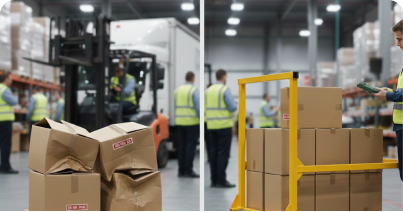
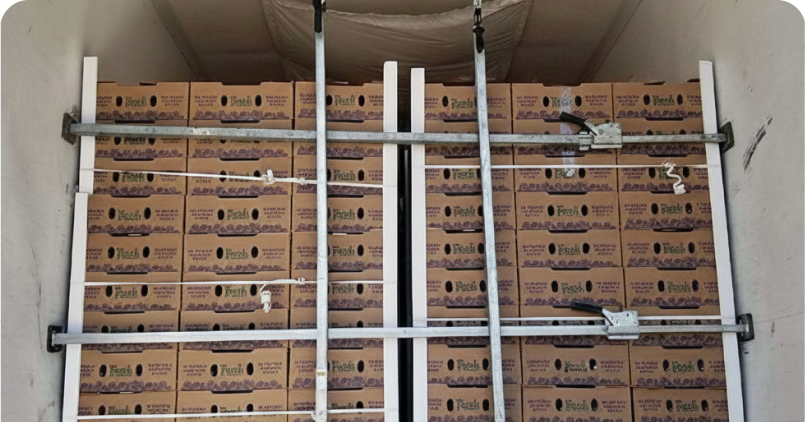
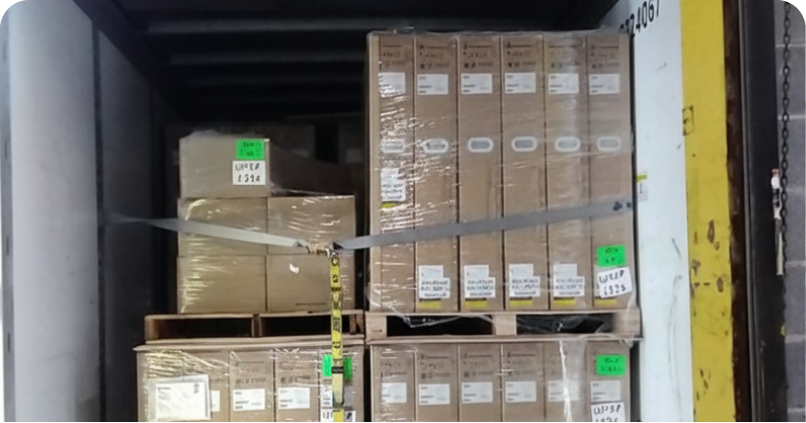
Every load is in a constant battle with physics. The driver opens the trailer door, and a pallet that started the trip perfectly stacked is now leaning like the Tower of Pisa, or is already on the floor.
But why did it fail? Because the relentless forces of the road—acceleration, braking, and vibration—found a tiny weakness to exploit: the void. When you leave an empty space between pallets or the trailer wall, you give your cargo room to move, lean, and ultimately collapse.
We’re not fighting bad luck; we’re fighting physics. This isn’t just about a damaged product claim; it’s a failure of load securement best practices that directly impacts your costs and customer trust, making preventing shipping damage a top priority.
Fortunately, the solution is simple, affordable, and immediately actionable on the dock floor. Let’s dive into the most effective method for eliminating that critical void and securing your investment.

Why Loads Tip Over

In transit, your shipment is constantly fighting forces like sudden braking, sharp turns, and continuous vibration.
The real enemy? Empty space. Any gap between pallets or between the load and the trailer wall gives those forces room to work. Movement builds into a big lean, and the damage is done by the time the doors open. 
This isn’t just a minor headache; it leads to damaged goods, lengthy claims, frustrated customers, and a hit to your operation’s reputation.

Best Practice: The Warehouse-Floor Truth—Airbags Work

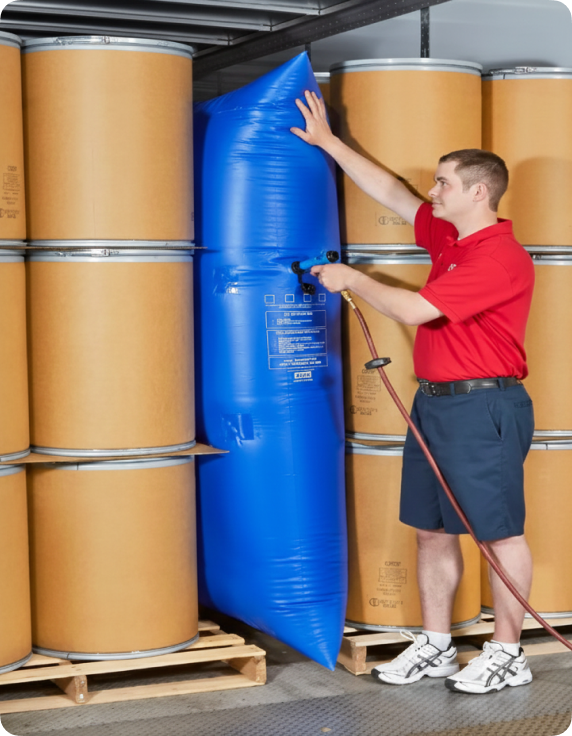
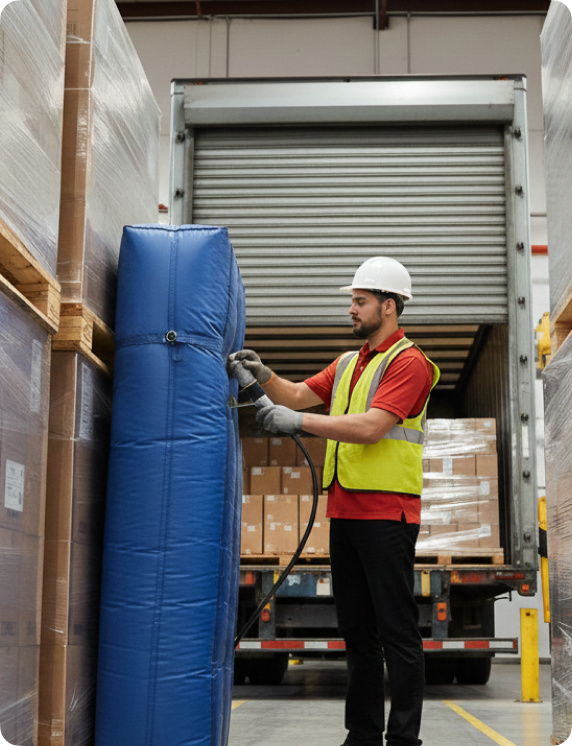
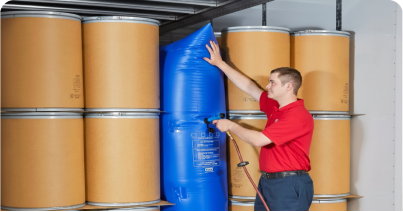
One of the simplest, lowest-effort, highest-impact tools for improving in-transit stability in transportation is airbag dunnage (also called inflation Dunnage Bags).
Think of them as the seatbelts of your freight. They aren’t complicated or expensive. But they address the #1 enemy of load stability: empty space.
When placed correctly, these dunnage bags help ensure solid cargo securement by:
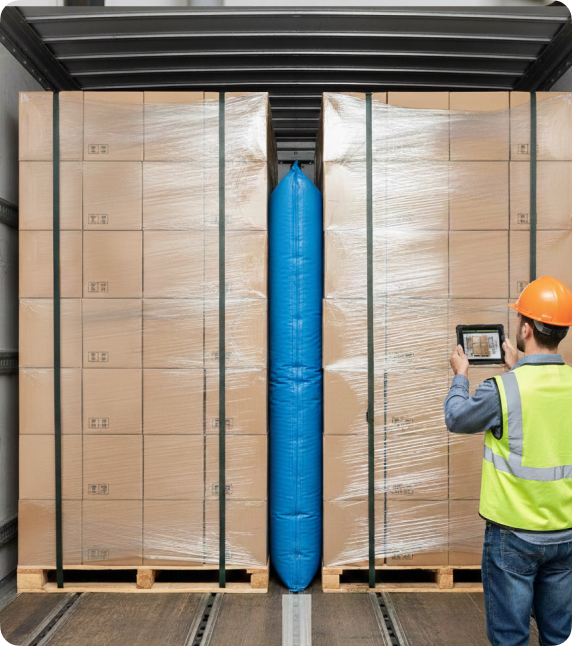
  1. Filling the gaps between pallets
  2. Absorbing impacts from sideways and forward movement
  3. Distributing pressure evenly across the load
  4. Preventing shifting in all directions
  5. Keeping tall or lightweight pallets from leaning
In short: they give your freight no room to misbehave, which is critical for preventing shipping damage.

Where to Place Airbags for Maximum Effect

Placement is everything. Here’s where seasoned loaders deploy them:
  1. Between Uneven Pallets: A height difference of just a few inches can cause leaning. Airbags bridge the gap.
  2. Against Trailer Walls: This is crucial for countering sideways shifts during turns.
  3. At the Trailer’s Front: Helps absorb the forward momentum from hard braking
  4. In Any Large Gap: Any open space wider than a few inches is an invitation for trouble. Seal it.

Practical Tips from the Warehouse Floor

Here’s what experienced loaders know that manuals don’t always say about ensuring proper load securement:
  1. Don’t underinflate:An airbag that is too soft won’t absorb pressure or eliminate the void, rendering it useless against freight damage.
  2. Don’t overinflate:You’re stabilizing freight, not trying to wedge the trailer apart. Over-inflating risks bag failure and potential container damage.
  3. Check friction:Smooth shrink-wrap can slide. Airbags reduce the slide by locking the load in place.
  4. Use load patterns that support stability:Column-stacked cases or tall lightweight items need extra attention and bracing.
  5. Document your loading pattern:It helps teams learn what works, improving future compliance and overall supply chain logistics.
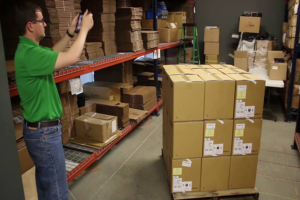
And finally, one of the simplest habits your team can adopt is taking a few photos after loading. Those time-stamped images of properly placed airbags and filled voids provide a level of clarity no email or explanation can match. It’s a simple action that prevents misunderstandings, supports faster claims, and reinforces consistency across your team. Airbags secure the load physically; photos secure your operation logically. Together, they turn best practices into everyday practice.

A Small Step That Solves a Big Problem

Preventing product tipping during delivery doesn’t require a major investment or complicated technology. Sometimes, all it takes is filling the empty space that physics loves to exploit.
Dunnage bags offer one of the most practical, field-tested solutions for in-transit stability in transportation. They help professional logistics teams protect their products, keep customers happy, and reduce preventable freight damage.
Share this Article
Dive Deeper